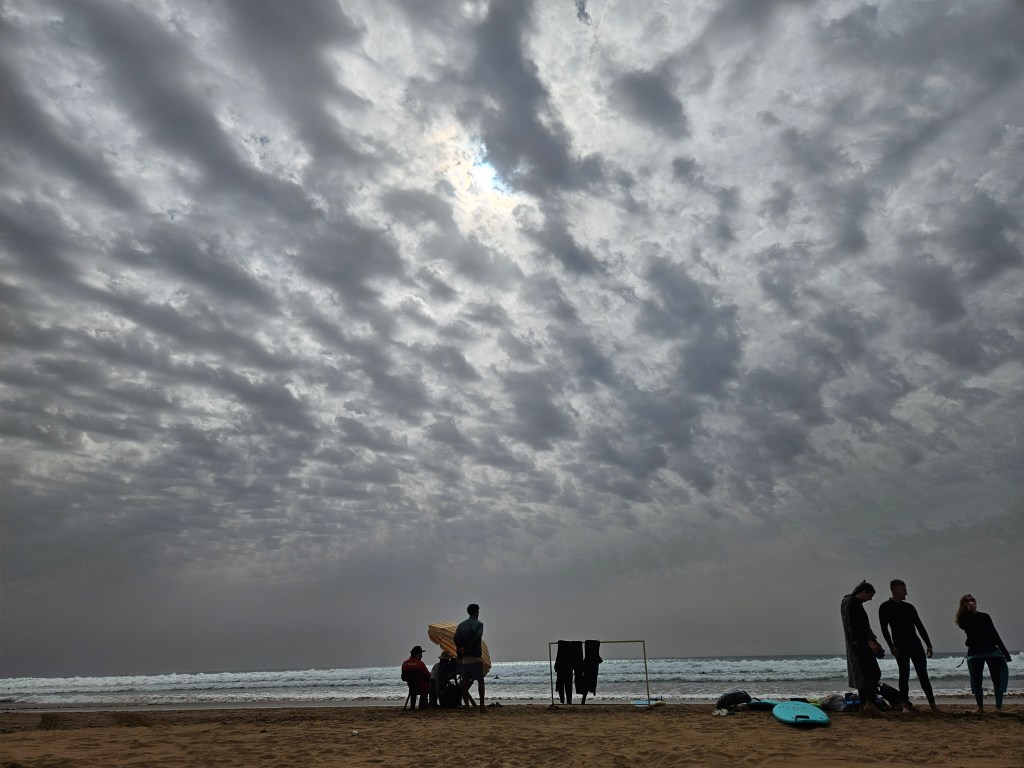
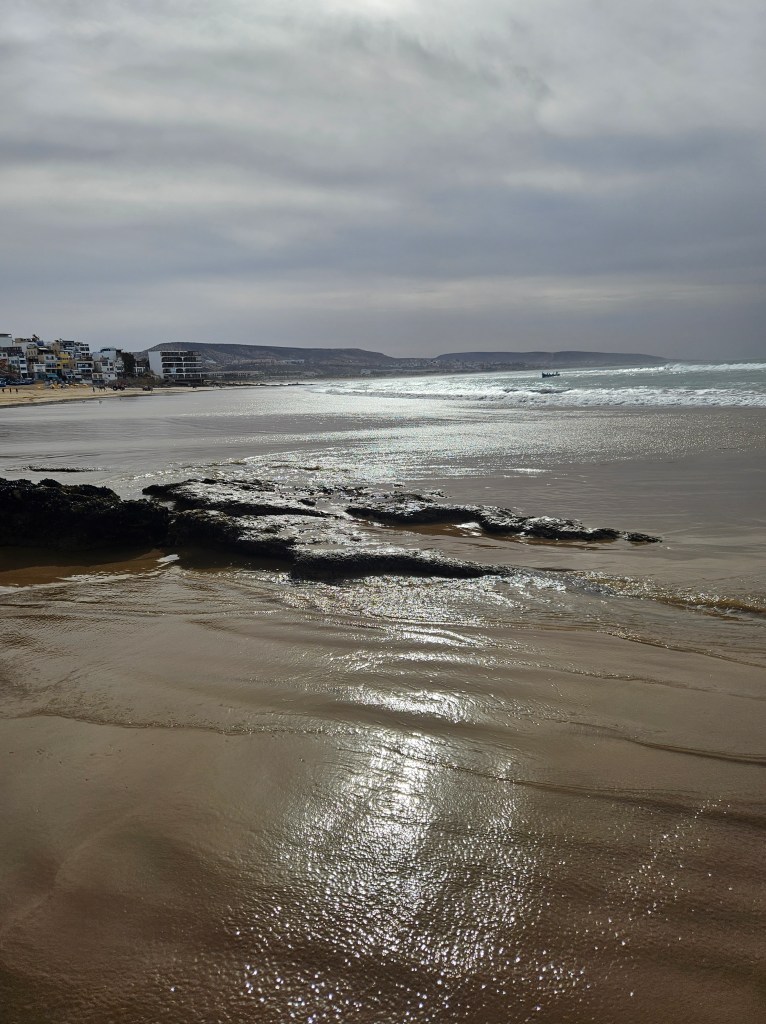
Things have slowed down the last couple of days, as the Taghazout choppy waves wash away my frantic London pace of life and I find myself staring into the sea a lot.
I thought a bit more about the kind of people who come here. Now that I have spent the full four days in Taghazout, I am a bona fide expert on the place. Obviously.
I guess the first step in the natural selection of visitors comes when prospective Taghazout travellers ask themselves the all-important question, do we want to spend our holiday in a place where we cannot have a beer or a glass of wine with our dinner? If the answer is no, they cross Taghazout off their list, and book Tenerife, again. Win win for everybody.
The absence of drunken thrill-seekers makes a big difference.
The majority of people who come here have indifferent relationship.with alcohol, and the fact that Taghazout restaurants do not serve any is of no consequence to them. There are exceptions.
Trigger warning: national stereotyping ahead.
The other night, a man with a very strong Irish accent joined the rooftop dinner crowd. He introduced himself and after rushing through some rudimentary small talk, he asked, where one can get a drink around here. After a short silence, somebody said, I am not sure but I think there are some bars at the end of the village. The rest stayed silent and the Irishman got up and said his goodnights. The next day he came late for dinner, told the group that he had checked out the bars, and yes, they served beer there, but it was very expensive, London prices, London was where he lived by the way, and they did not have much of a range. Again, he was greeted by hushed silence from the rooftop audience. He checked out the next morning.
European visitors who come to Taghazout are here either on a hardcore surfing holiday or they book themselves for an extended stay which combines surfing with remote working. The latter makes them digital nomads, the holy grail of economically active generations.
Taghazout digital nomads is a catch-all phrase for anybody who fits in regular work into their Moroccan lifestyle, be it as an employee or an entrepreneur, working on an existing business or laying foundation for their next big thing. To become a digital nomad you need to announce that you are one, a laptop, and the self-discipline to actually do some work.
Digital nomads enjoy an elevated status compared to plain holiday makers, the name itself has a vague Star Wars ring to it. They live slowly and mindfully, they dabble in creativity and spiritual renewal, they do not do all the touristy things all at once, if at all, and they eat a lot of couscous.
If you fancy yourself as a digital nomad in Taghazout, you want to search for accommodation with the word ‘co-working’ in the name. Co-working place is still basically a surf hostel, but in addition to a rooftop canteen, it offers another communal space with desks, where the working nomads work. Checking yourself into a coworking place in Taghazout for a couple of months really is a great way to spend your winter.
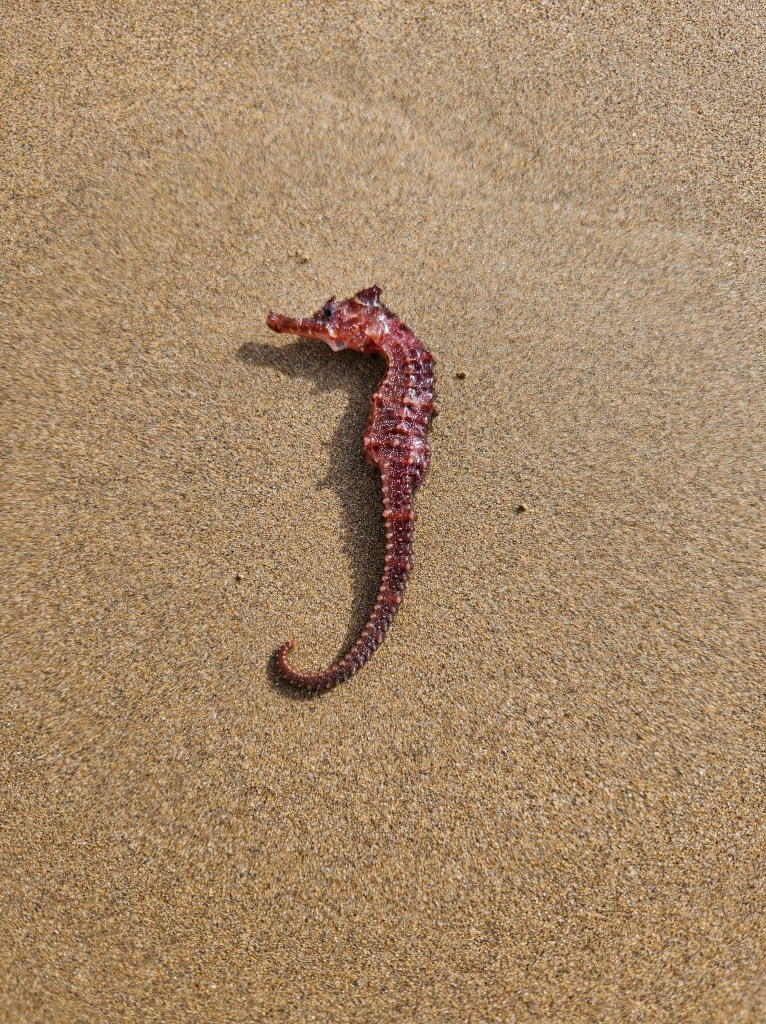
I found a seahorse on the beach today.
At first he looked like a piece of seaweed as he floated on the surface, but when I looked closer, there was no doubt. I picked him up, put him on wet sand and took a picture. Unfortunately, there was no banana nearby but he was about 10 cm.
And then he spluttered! He was alive, sort of, only just. I jumped. He spluttered again, like somebody who nearly drowns and then they splutter and they are fine. I picked him up by his middle bit and ran back to the water with him, and he kept choking and spluttering and then I hurled him as far out into the sea as I could hurl something which weighed next to nothing.



 Ania Heasley