Little Poland SW17

Oplatekcover

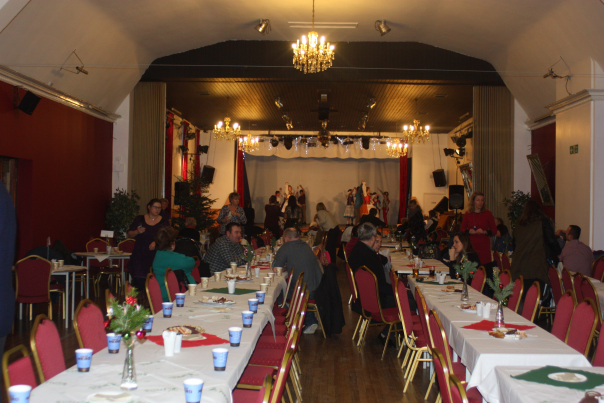
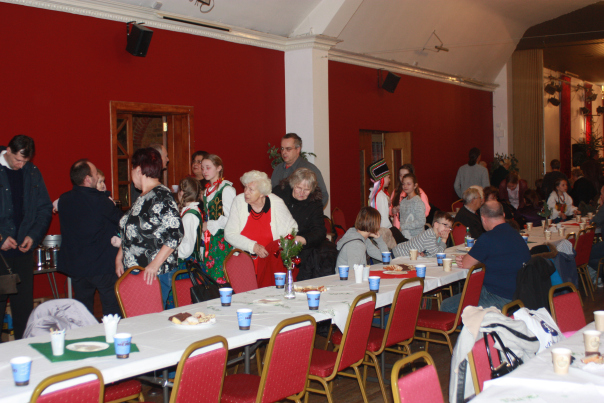
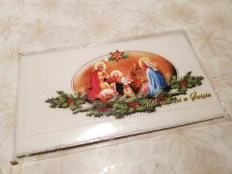
Meanwhile in a remote Polish village of Balham, locals have gathered for an annual Opłatek Parafialny (lit. parish Christmas wafer), the ritualistic breaking and sharing of Christmas wafer. The tradition is sacrosanct in Poland and all its overseas outposts.  It consists of sharing a piece of white wafer, closely resembling communion wafer in Catholic church, with one’s nearest and dearest, whilst at the same time exchanging lengthy elaborate Christmas wishes.  It takes place on the 24th of December, during traditional 12-courses Christmas Eve supper, a Polish national institution, known as Wigilia.  Non-Poles who try to imitate this custom with just a cheery Merry Christmas miss the point of reciting a list of well thought through and personalised wishes, enumerating all the ills to be remedied and specific aspects of prosperity that we wish the Christmas season to bestow on the recipient of our tiny piece of wafer. I digress.

Balham White Eagle Polish Club has been hosting the Opłatek event since time immemorial, or at least since Polish settlement in Balham took hold some decades ago.  The ritual is observed according to a reassuringly predictable protocol. This might seem chaotic, even brusque to outsiders, but Polish Balhamites find comfort in the proceedings.
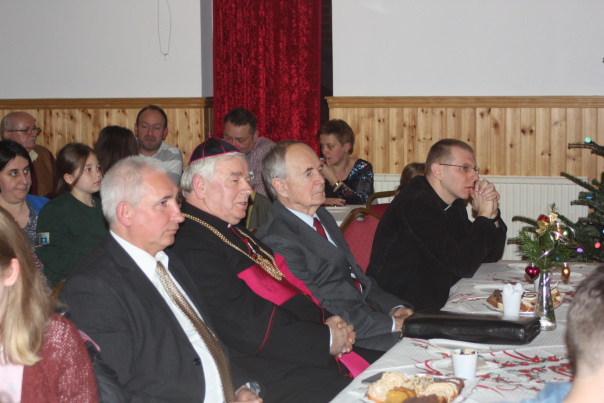
To begin with, the Parish Chairman welcomes everybody in the room.  A panel of parish priests bow majestically. Hand movements are uncannily royal.

First artistic offering of the evening is traditionally provided by parish choir.  A group of around 15, mostly female, very smartly dressed singers in white blouses and floor length black skirts, all with matching glittery necklaces, take over the stage and deliver a series of traditional Polish Christmas carols. Feliz Navidad it ain’t.
Operatic tones and solemn melancholy songs set the mood. This can be dangerously sleep-inducing to uninitiated outsiders, and looking around I notice some of the 200-strong audience  in semi-slumber.  As for the Poles in the room, the familiar Christmas music from their church-going childhood back home seems to be doing the trick as they are gently carried back to memories of  motherland. Warm fuzzy feeling spreads slowly around the room.  Foundations are laid for the main event of the evening.

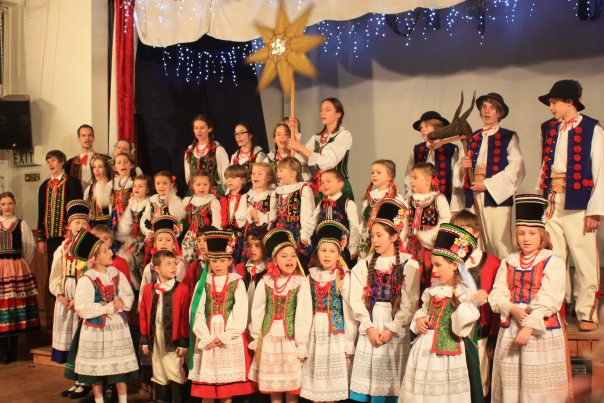
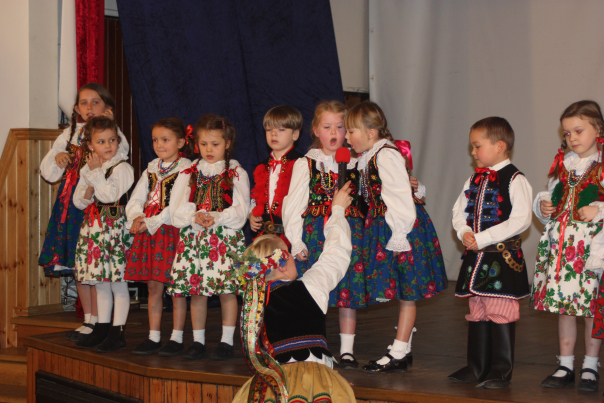
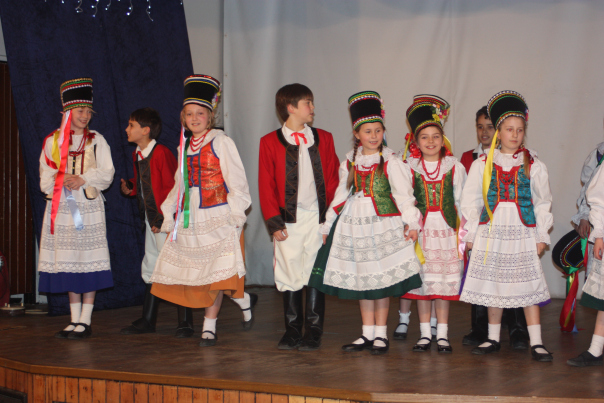
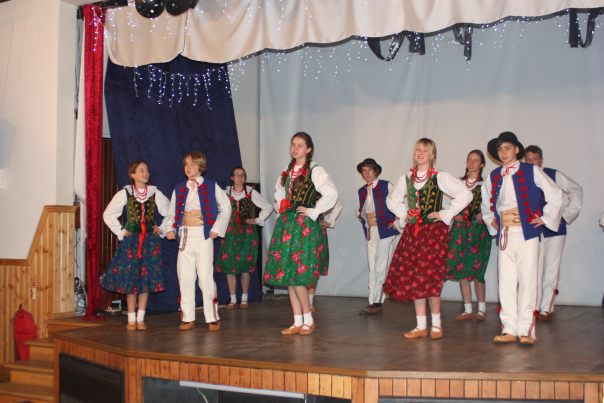
The next hour or so belongs to folk dance groups Lajkonik and Orlęta. They are divided into four age groups, ranging from adoringly clumsy 4 year-olds to professionally looking dancers in their mid to late 20s. They are all simply amazing.  Basia Klimas-Sawyer, who has been running the groups for 42 years, is a household name in Polish Balham and a true national treasure. Generation upon generation of Polish dancers in London owe their adventure with Polish folklore to her. She has to be seen to be believed.

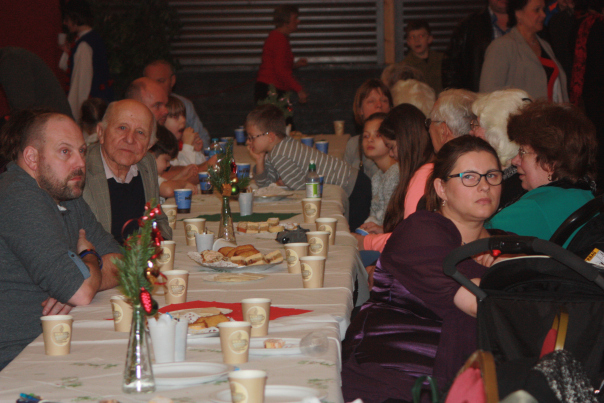
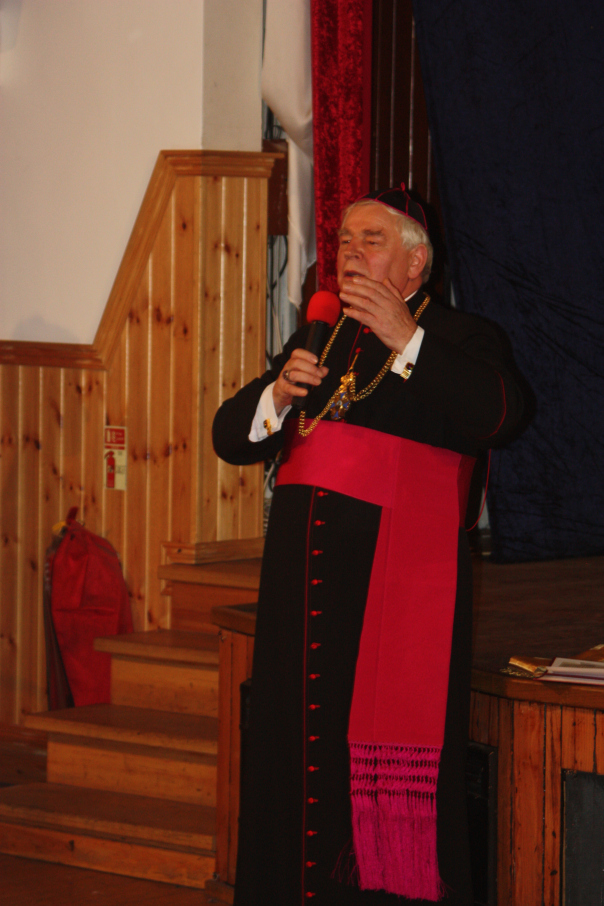
After the show, the parish priest takes centre stage, says a few seasonal words, sprinkles holy water on the Christmas wafers and off we go, sharing the wafers with friends in the room, exchanging wishes and three kisses on the cheeks. Tea and coffee is served, as well as a selection of slightly tired looking cakes; a gift from the chairman of the parish, who happens to also run a Polish bakery.

A couple of hours later we suffer from a serious case of Polishness overload. Still, we say our do widzenias safe in the knowledge that in less than three months we’ll meet again at Święcone (the blessing of the Easter food basket) gathering.  This time we will be sharing hard-boiled egg quarters. Same place, same crowd, same dancing routines.
I can’t wait.

LPSW171
Setting up

LPSW172
Guests arrive
LPSW173
Thrilled to be here

LPSW174
Lajkonik and Orleta gather on stage

LPSW175
Plynie Wisla plynie, a song every Polish nursery child knows by heart

LPSW177
And bow

LPSW178
Middle group in action

LPSW1711
Balham Polish parish high and mighty, oh, and father Jerzy far right.

LPSW1712
Father Wladyslaw Wyszowadzki in full glory


Mushrooms, there were aplenty *

fungi (1)

Today, a rare glimpse into Polish literary and fungal national traditions.

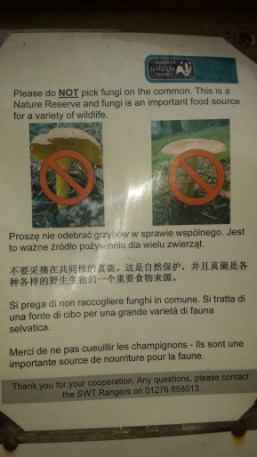
A badly google-translated sign found at the Chobham Common car park last weekend inspired me to delve deeply into a widespread Polish custom of mushroom picking.  Every Pole worthy of their name is an expert mushroom picker. It’s one of those habits, like playing with live carp in the bath the week before Christmas, and painting elaborate patterns on boiled eggs for Easter, that all Polish children carry in their genes. By the age of ten, you confuse your boletus, and your chanterelles with your toadstool at your peril. Quite literally.  Several hundred people are reported to suffer from varied degree of mushroom related food poisoning every year. Fatalities are rare, but they do still occur.

A highly venerated 19th century Polish poet, Adam Mickiewicz,  exalted the joys of mushroom-picking in his epic oeuvre,  Pan Tadeusz, as long ago as 1834.  And since this masterpiece of rhyme and rhythm was (still is?) compulsory reading for all Polish secondary school students for about a century, the mushroom picking, alongside many other Polish customs mentioned in the book got elevated to an almost patriotic deed and national duty. Just a little more background here, the plot of Pan Tadeusz is set in 1811-1812, when Poland did not exist as an independent country, and Polish patriots put great hopes in Napoleon’s defeat of Russia, the common enemy. Everything in the book, written when Poland was still long way from regaining independence, was seen as an essence of Polishness.

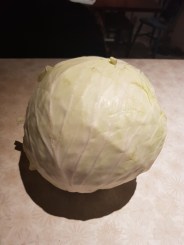
Mushroom picking and bigos making received celebrated status, something which both these activities still enjoy today. Bigos, since I am sure you are now dying to know, continues to be one of Poland’s flagship dishes. It is made of sauerkraut mixed with fresh white cabbage, chunks of meat, sausage, and yes, dried wild mushrooms.

When Poland joined the EU in 2004, hundreds of thousands of Poles descended on unsuspecting sleepy English countryside. Old habits die hard and so soon enough the new arrivals were seen  traipsing the woodlands and the commons of their new host country, with baskets and other mushroom picking paraphernalia.   Mushroom picking is not a hugely popular pastime in England. An average Englishman is usually able to distinguish between button mushrooms and flat cap mushrooms, and they know that the best place to find them is between the peppers and the onions in their local Sainsbury’s vegetable aisle.

As the picture above clearly shows, the Polish mushroom picking custom has been duly noted by local authorities in the UK. Surrey Heath Council awarded the Polish language version of their multilingual mushroom picking ban the top spot, ahead of such other mushroom-picking giants as the Chinese, the Italian and the French.

I, for one, find this fascinating.

* ‘Grzybów było w bród…’, Pan Tadeusz, Book III

Wigilia

cabbagekarpoplatek


Warning: This story contains scenes that some readers might find disturbing.

Let me sort out etymology and semantics first, and once this is out of the way, I shall explore a small fraction of the vastness of Wigilia and depths of importance this tradition carries wherein. The word Wigilia looks and sounds too similar to Vigil, especially when we realise that ‘w’ is pronounced as ‘v’ in Polish, for the two terms not to be closely related. It also means eve, as in the day before something.  Wigilia with capital W, however, means only one thing to Poles around the world; Christmas Eve, the most Polish day in the year.  As soon as it is spoken, the word triggers a plethora of images and memories in the minds of all Poles. It is dripping with nostalgia and meaning, it has its own smells and sounds. Wigilia is the name given to the whole of the 24th of December, but it can also refer just to the celebratory evening meal eaten on that day in every Polish household. It’s the main Christmas event, Poland’s response to turkey and stuffing with the Queen speech and Doctor Who in the middle.

Wigilia is governed by a strict set of rules whose origin is often buried in obscurity.
Everything you do on the 24th of December is somehow relevant, meaningful and elevated by the fact that it is all part of Wigilia.

My own Wigilia memories are all centred around a small flat on the top floor of a 1970s block of flats in a suburb of Lodz, my home town. As I am the only remaining witness to my childhood Wigilias, they have recently acquired a heavily sentimental dimension, strongly reminiscent of Dickensian ghost of Christmases long past. I believe that our Wigilias were typical of the time and the place, so it is safe to assume that what follows is pretty representative.

Our family size was modest, even by Polish standards at the time, just me and my parents, no siblings, no cats. Grandma hovered frequently in the background.  I did not mind this at all, in fact I loved this setup a lot, it gave me all the time in the world to play with imaginary friends, what not to like, but that meant that Wigilia was a small-scale event too, so the first image that comes to mind when I think of Wigilia is my small family, three or four of us busing ourselves around the flat.

First thing in the morning my dad and I were always given the task of decorating Choinka, the Christmas tree, which kept us safely away from the kitchen where mum and grandma were frantically chopping, mixing, basting, folding, cutting, baking, roasting. The tree was always real, floor to ceiling, dropping needles the moment it was hauled through the front door. We took our time, my dad reaching top branches and hanging decorations with solemnity and precision, me messing around lower branches, stuffing tufts of silver tinsel everywhere. The feature length Snow Queen was a Wigilia morning TV staple, and year on year I never failed to be terrified by her cold stare.

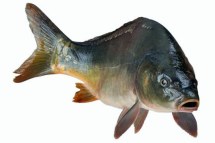
Next item on my Wigilia morning agenda was sneaking into the bathroom to say a sad goodbye to carp swimming in the bath. I would put my hand in ice cold water and stroke their slimy sides fondly. The carp were usually bought a few days before and they lived happily, although clearly not ever after, in our bathtub. Our personal hygiene must have suffered, but that was not something my single digit self was too concerned about. They splashed and frolicked up until the moment my grandma took them out of the bath and calmly put them on a chopping board, wrapped them in a tea-towel and with one swift movement, defying both her advancing years and arthritis, smashed their heads in with a hammer. As soon as the flapping stopped, and it was safe for us to re-enter the blood splattered kitchen, dad would take over fish preparation, scaling and gutting the wretched creatures, whilst mum resumed chopping carrots and turnips.

We sat down to the most important meal of the year around six o’clock, but before sitting down we shared  Opłatek, which is  apiece of what looks like communion wafer. Opłatek sharing is probably the most Polish of all Polish traditions. It consists of each of us breaking off a piece and exchanging it with one another, whilst saying long,  highly personalised wishes of health, wealth, happiness, prosperity and more.

Wigilia supper was supposed to include twelve dishes. This was a tall order indeed and I remember cutting corners, and counting butter and condiments to make up the numbers. Throughout my childhood, Wigilia meal was also meat-free, as dictated by the Catholic Church powers to be at the time, but fish was allowed. Within a space of couple of hours we would go through servings of herring salad, vegetable salad, beetroot soup with ravioli-shaped sauerkraut and mushrooms filled parcels, pierogi,  aka Polish dumplings, filled with more sauerkraut and mushrooms, fried field mushrooms, fried carp,  yes, him, poppy seed cake, baked cheesecake, cold cheesecake, and a lot of bread and butter.
One of the issues that has been dividing Polish public opinion for generations is the choice of Wigilia soup. The choice is narrow, and is between beetroot soup, barszcz, or a mushroom soup only. My family was always firmly of a barszcz persuasion.

Throughout supper we listened to Christmas carols, the solemn religious variety, but in Polish, and with an addition of a few sweet and tender lullabies for baby Jesus. I remember feeling genuinely sorry for Polish version of baby Jesus, he seemed to be always shivering from cold and crying a lot.

After Wigilia supper there was only one more thing to do, the thing I had been looking forward to for weeks. Santa visits Poland on Christmas Eve, straight after supper, possibly as a reward for eating all that carp and cabbage all night.
My Polish Santa used to drop a sack full of presents by the front door to the flat, rang the doorbell and always managed to run away before I sprinted to the door to catch a glimpse of him.

After opening presents it was bedtime for grandma, oh how I wished I could swap places with her, I envied her each time.  As she was getting all cosy, my parents and I were wrapping up for Pasterka, aka Midnight Mass, or literally, shepherds’ mass.
Church-going is extremely popular among Poles and my parents were devout Catholics, so Christmas was always first and foremost about the birth of Jesus, carp killing a remote second. Pasterka is yet another magical Christmassy word, which, together with Wigilia and Opłatek makes it a uniquely Polish trio, almost impenetrable to others.
Truth be told, I was never personally keen on Pasterka, so here, Christmas confession. After eventful Christmas Eve day, after all the food and the presents, the last thing I wanted was to spend close to two hours in church. As a child I always found church incredibly boring, and being taken there in the middle of the night at Christmas did not help.

It’s been almost thirty years since my last Wigilia in Poland but I can still remember the unique intensity of the day. Wigilia has a special place in my memories, but whenever I think about it now I never know where Christmas begins and my childhood ends.

Christmas in November

Christmas3

Christmas2  Christmas4

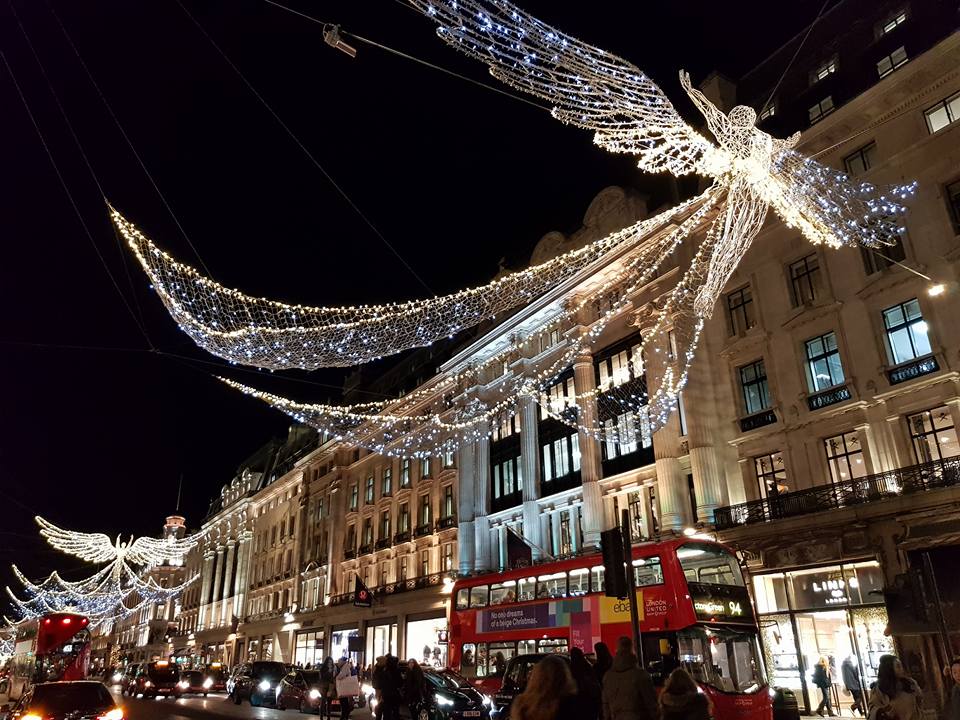
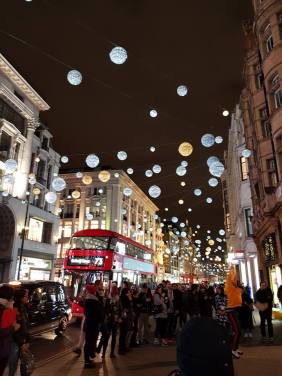
On the 22nd of November I posted a few hand-picked photos on Facebook, as clear evidence that Christmas feeling has yet again descended on Central London, enveloping the West End in its annual dreamy magic.  The reaction I received was mostly positive, my phone takes really good photos after all, in fact it sometimes enhances reality with added vibrancy of colour and depth of perspective, in this case sprinkling everything even more generously with Christmas fairy dust.

Still, some people responded with a humbug, ‘What, Christmas lights already?’, to which my instinctive reply in turn was, if not now, then when?

Christmas season needs to last at least a month for its message to reach enough people, for all of it to sink in and for the effort to be worthwhile.

Christmas is a many-layered creature. First, there are the practicalities of it all.

It’s not only that enough people need to make it to John Lewis to buy this year mascot fronting the store’s Christmas advert, and to make sure they have enough  Christmas-coordinated place mats. Amazon delivery times, so reliable for the rest of the year, can be treacherous at Christmas, so starting early has become a necessity. By end of November you might as well give up on some items, or order them for next year’s Christmas, if you are confident that your child will still be happy to receive those unicorn fairy lights they asked Santa for, in twelve months’ time.

Then there is the religion, the Mary’s boy child Jesus Christ approach to Christmas. If you are a devout church-going Christian, and Christmas is mainly a spiritual event for you, then chances are you celebrate the season within slightly different timeframes, but it is still a lengthy drawn-out affair, as it starts on the first day of December with the first day of Advent and ends on the sixth of January with Twelfth Night, aka Epiphany. This is the day on which, according to one school of thought, the Magi, aka Three Wise Men popped in to see Jesus. They missed out on the last of turkey sandwiches, but still brought Christmas presents for the Baby.
Traditionally, some practising Christians used to feel smug about Christmas, and acted as if they possessed exclusive rights to the season.

They don’t. In this day and age, everybody can get their very own piece of Christmas, it is all there for the taking; the carols, the lights, decorations, the cards and the non-drops, the Nutcracker at the ENO, the school fairs, It’s a Wonderful Life, Winter Wonderland, Somerset House ice rink, the South Bank market, panto at the Palladium, Ocado guaranteed Christmas delivery deadlines, Love Actually, the Crisis Christmas Appeal, Eastenders special, and this is just a small part of my personal Christmas to do list, and it doesn’t even include the goes-without-saying essentials involved in inviting close friends and family for a Christmas Day feast. Looking at it now, I am surprised I didn’t start going through that list before summer holidays.

Still, if Christmas is to make any sense whatsoever in today’s world, it needs to go beyond Amazon delivery times, John Lewis advert, and Biblical Baby’s birthday.

If Christmas is to be worth all the advertising budgets and the frustration of trying to disguise the shape of a guitar using a cheap 3 for 2 wrapping paper, it has to go further.

If done properly, Christmas takes time.  Time to slow down, step back, reflect, and channel your inner post-visitations Scrooge.  Time to look around and see who could really benefit from your fat goose this winter. Time to reach out and deliver that goose where it’s needed, time to make a difference. Everybody is different so making a difference will mean something different to everybody. It includes, but is not limited to, all the seasonal clichés. Invite lonely friends and neighbours for pre-Christmas drinks, offer to help at local homeless charity, adopt an unwanted post-Christmas puppy, drive an elderly lady from across the road to a carol concert, by all means buy that goat for an African village if that is your thing, or just genuinely make an effort to be an all-around nicer person, and who knows, you might like yourself better that way, and decide to keep it up even after you’ve boxed up all the tinsel for another year.

We are all very busy all the time. Slowing down takes skill these days. Christmas needs to be long enough to give us sufficient breaking time for the festive season to make a difference, otherwise we risk missing its point again.  22nd of November sounds like a perfect day to step on the brakes.

Merry Christmas, Everyone!

Kick it up

Leaves1  Leaves2

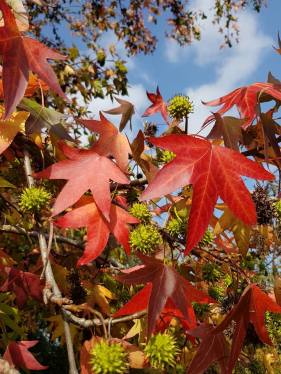
The leaf-kicking season is peaking right now. It is a short period which lasts for a few weeks beginning in mid-October. It is something I have always taken for granted, like daffodils in spring, cornflowers in summer and frosted grass in winter. One of those things you can always rely on, it comes round every year and gives reassurance that at a leaf-falling level everything is still well with the world. The leaves act with elegance and discretion as they quietly gather themselves in silent piles, and just sit there. They do not stay with us for long and when they are gone they are gone, and when it all inevitably turns to black and brown shrivelled slush nobody minds because by that time Christmas is almost here anyway, but that’s another story.

It is true that you learn new things all your life, and so recently, shocking as it was, I was alerted to the fact that not all people experienced leaf-kicking season in their childhood.  In fact, adults now, they are still not familiar with the custom. What is even more amazing, I discovered that I have lived with one such person for what seems like for ever. A couple of weeks ago I said to him, let’s make time this weekend and go to the park, it’s leaf-kicking season. ‘It’s a what?’, he asked not without apprehension.  How could I have missed this? How could I not have noticed the glaring depravation he carried with him all the way from his African boyhood until now?

We went. We found a suitably wide leaf-carpeted path, and off we went, kicking. He was clumsy at first, lifting his legs too straight, too high, an overzealous soldier on parade, totally focused, coordination lacking, arms flailing, keen to get it right. I followed quietly in his wake, making my expert-level kicks and shuffles look effortless, and left him to find his own style.  I didn’t have to wait long before the all-familiar leaf-kicking smile of joyous self-satisfaction appeared on his face. I smiled back, knowingly, and we carried on, kicking, shuffling, digging in, sending small clouds of leaves, dust, soil, grass, up in the air, until the right moment came and there was nothing else to do but to stomp our feet, shake off speckles of dust from our jackets, and carry on walking along, with renewed calm and contentment, back in the role expected of us, a pair of middle aged adults again.

Later that night I heard him talk to his mother on the phone, ‘Ania took me to the park to kick leaves today. Yeah, apparently it’s a thing. It was quite fun, actually’.

Go on, have yourself a good kick and shuffle today.

Accident of life

bluefrog

My mother chose the morning of my eighteenth birthday to inform me that I almost didn’t happen. So long, childhood, hello brand new adult life.

My father was about to leave on an expedition, my mother continued, and was all packed and ready to say his last goodbye to his fiancée, my mother, before setting off, when he double-checked his plane ticket and realised that in fact he had another half-hour to spare.

It transpires it was during that half hour that I came to be.

Three months later a couple of letters crossed their paths over choppy waters of the Atlantic. Letter number one was from my mother to my father sharing the happy news of my imminent arrival with him. Letter number two was from the leader of my father’s expedition informing my mother that my father had decided to join the Amazonian tribe he was supposed to photograph.

As a child I only asked my mother about my father once.  She responded that she hoped he had been eaten by the biggest crocodile in the darkest corner of a swamp in the Rainforest. Something in the tone of her voice told me not to ask again.
Ever since my mother opened up about details of my haphazard conception, I learnt to treasure every moment of my life, the life that came so close to never happening at all that I felt obliged to cherish it. I count my blessings and I celebrate every day. I live what the carpe diem school of thought life coaches preach.

The thing I am most grateful for in my accidentally created life is my own family that I have built, purposefully and deliberately, with my husband, because despite my mother’s desperate attempts to talk me out of men, I fell in love and got married.

I have stayed married for a rather long time now. There are five of us. The children are no longer children in the eyes of major airlines and hotel reservation systems, but they are and will forever remain children to me. They are coming to terms with the fact that their mother is in denial about their growing up.

Our chaotic lives are perfectly capable of running independently of each other for extended periods of time, but we always come together at moments of hunger, boredom and cold weather. We seek each other out whenever we feel anxious, overwhelmed, overworked, unappreciated, ugly, fat, or simply having a bad hair day.

We also come together in our moments of triumph, big or small, and we make it real by sharing with the others. One way or another we come together a lot.

I believe that witnessing one’s little family coming of age is the best experience that anybody will ever go through in this life. It is actually far better, much more rewarding than I ever thought possible. Having a family is the most mundane, most common thing that happens to people, but at the same time it feels like a miracle that happens to me and me alone, again and again, one day at a time.

My daughters have grown up to be these beautiful, amazing creatures, wise beyond their years, brave, witty, and strong.
My son is doing his level best to figure out what’s what, to make sense of the world around him. It’s still hit and miss, but he will get there.

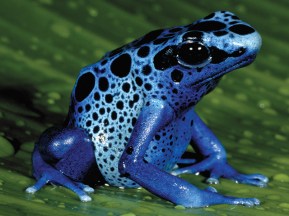
Every now and again I think of my father. I like to believe that he has survived my mother’s curse, and I picture him somewhere out there in the Amazon jungle, as he watches a mating dance of neon blue poison arrow frogs on the ground, or the frolics of spider monkeys swinging from treetops overhead.  A couple of toucans croak nearby and a flock of red and blue parrots soars high up in the sky.
I cannot begin to comprehend the madness that made him give up the joys of family life with my mother and me for that sort of crap.

DISCLAIMER:

This story is a work of fiction. It is not based on my personal family circumstances. It’s an exercise in nonsense writing fueled by my imagination. I apologise for misleading anybody into thinking otherwise.


Arts and Crafts

At the ripe but for ever immature age of, well, the age I am now, I finally allowed myself a luxury of a daily torture which writing brings to those who write.

Over the last couple of years I have been told by people who had no ulterior motive in being either nice or dishonest with me, that I ‘should write a book’.  Fair enough, my close family members were among those who encouraged me, but they were not the only ones. Having spent several decades trying out all sorts of ideas and scenarios, I thought, fine, why not, I’ll do it, I’ll write. So it is being done, I am writing a book. The Book. Please do not ask me how it is going. Do not ask me how much of it I have written, and if and how I am going to get it published. Ask me something I might enjoy answering instead. Ask me what I like about writing, how I motivate myself every day, because yes, I do write every day, no really, I do, you can ask my cats, they are my annoyingly faithful companions. They must be wondering why I took to staring at them with such unwavering intensity of late. I wouldn’t be surprised if they are getting as freaked out by me as I am when they stare back. Freaked out is not a particularly literary word, I am aware of that, but it’s the only word I can think of when talking about how my cats make me feel with their feline superiority and aloofness. Awkward, you might think, she calls herself a writer and she cannot even think of a proper word for how her cats creep her out, so here, another word, creeped out. That will have to do for now, I am still a beginner.

Starting The Book has brought a few rejuvenating changes in my life.
I wake up early and exhilarated because today is another day in which I am going to write. I open a blank document and just write, Nike style, even if I do not feel particularly inspired, even if my creativity is still dozing away, even if I should really be getting ready for my day job, even if all of that happens at once, I still write, if only for a short while.

For the first week or so it felt incredible, it felt like I was the very first person ever going through the new-to-writing experience, I thought I was being really clever doing what I was doing, and was beginning to feel the first flushes of smug self-complacency.  I have since had it confirmed on good authority, Google no less, that all of that is standard writing experience. In fact, I turned out to be such a predictable writing cliché I feel robbed of my uniqueness.

A very thorough industry research followed, average daily word count by best-selling authors, daily writing routine, best time of day to write, do I write on weekends, how many words per published page, how many words per average first fiction book, non-fiction, flash fiction, pros and cons of self-publishing, essential reads for would-be writers, I looked up the lot.

The truth will always out with Google. It tells me there are no writing groups of any description near me. No results found, accompanied by an empty five-mile radius circle. Brixton to Purley, Bromley to Mitcham, nothing. I haven’t yet decided how I feel about that. On one hand it can be good news as it might mean less competition submitting to Croydon Gazette. Then again, this greyed out writers-free zone might mean that no writer of any worth has ever emerged from barren clay soils of Upper Norwood. Challenge accepted.

Based on what I have learnt, I believe that what I am writing right now is called a craft essay, I am pretty sure it is. Like with craft beer, the aim is cool and not too frothy. Craft essay is writing about writing and being witty about it. This one ticks the first box, but then it gets a crafty rather than witty. Still, fifty percent at first attempt isn’t bad so I am going to give myself a cautious pat on the back.

My husband still thinks it is all an extended joke. He comes into my study in the morning to say goodbye and he notes merrily, as he buttons up his shirt, ‘oh, you are creatively writing then’, he then giggles himself out of the door. My husband, my rock.

One thing I am looking forward to next is purchasing the whole new Writer’s Wardrobe. Writing clothes are ever so forgiving, all chunky knits, flowing oversized boho dresses, and combat boots, oh, the boots are just the dream! Not sure about the bandanas though, they make me look like Zorro without a hat.

What else? My mind is faster than my keyboard, my mouth is faster than my mind. That is nothing new, I have always known this, but what is new is the frustration it now brings me on a daily basis. When I try recording myself, that red recording button doubles up as self-censoring device, so that’s a no.

My favourite new hobby is staying up late and setting traps for thoughts and ideas when the whole house is asleep, only me and the cats again.  Also first thing in the morning, and in the bath, and if I stay still enough for long enough, I get a firm grip on a few, but some good ones still manage to get away.


You cannot escape mother’s love

– I was dumped last weekend, mum.

– Oh, dear, again? You have had quite a few of those, haven’t you? Oh, well, to be fair you have done a fair share of dumping yourself, haven’t you, so well, sometime a dumper, sometime a dumpee, but this one would have never worked out, what was even her name?

– Chloe.

– Hmm, yeah, I liked a couple of them, I was quite cross with you when you dumped that cute one, the first one, you know, the one who looked a bit…

– Julia

– …like me, yeah, Julia. She was really lively, and pretty, of course, cute girl, you know you were both very young and all that but I thought it was so sweet that you got all dressed up in your tuxedo all over again the next day just so you could take a proper photo with her, after that ball you two went to. And the girls liked her too, she talked to them about Jacqueline Wilson, remember? Yeah, she was my favourite, perhaps you could look her up again, or perhaps I could write her a letter, hi Julia, remember Matt, my son, he has just been dumped, again, would you mind giving him a second chance, I know he dumped you and all that, he thought you were a bit mentally, you know, but I am sure this can be managed with  medication, so please get in touch, he is still good looking, he ran the London marathon since you two last went out so still fit.

– I am not sure about that, mum

– Oh, don’t be silly, it’s worth a try. Another one I really like was Zoe, the last one at uni…

– Sarah…

– That’s the one. She was very friendly, and I think she kept you on straight and narrow, and she looked after you well, you could have tried a bit harder to keep her interested you muppet. Yes, she was a good one. I didn’t really like Lucy that much though.

– Leah

– That’s right. She was a bit bland, I can’t even remember her that well to be honest, just her brown boots when she came to stay, nice boots. Brown Boots Lucy, ha ha ha.

– Leah.

– And then there was this bubbly one who was never your girlfriend, but I really fancied her as a daughter in law, you see I am dreading not getting along with your wife, but she was great, a lot of fun, I loved how she sent you to bed and carried on drinking with your dad and me until all hours, oh boy were you grumpy about that, love. I am glad it didn’t work out between you and Elsa

– Louise

– Yeah, she was going to mess you around, so I am glad she did it straight away, sooner rather than later, all that big blond hair, that spelt trouble I could see it a mile away. Anyway, it’s getting late, I am glad we had this chat, aren’t you?

– Yes, mum.


Lexi does Halloween

How are your Halloween preparations going? Not applicable to your household? Lucky you.

At ours, two out of three kids seem to have outgrown it, and my husband is not too bothered if he spooks anybody any more on that day than any other day (kidding, honey, just kidding), but that still leaves our last born and, boy, does she make up for the others’ indifference. She can go from ‘normal’, yes, we still use this word, we like to court controversy, so anyway, it’s normal to world record stress and anxiety in ten seconds flat with our Lexi, and this week the subject is very much Halloween.

First, there is an issue of whether she has one Halloween event to attend or two.

A while ago she was vaguely invited to a Saturday night Halloween party at her best friend’s grandparents’ house, but as Saturday steadily approaches this has not been confirmed properly, so now Lexi is no longer sure whether she is invited or whether the party is indeed happening. I suggested texting the friend and asking, but Lexi just stared at me blankly not able to comprehend how I could be proposing something so awkward, so utterly out of the question.  The second event, and this one at least is fully confirmed and straightforward, is good old trick-or-treating nearby on Halloween night proper.

The costume question first arose some weeks ago. Lexi does not do obvious or predictable. She does not go for conventional or easy either. That ruled out vampire girls, fangs, fake scars, cobwebs and witches hats from the start. In fact anything black, anything off the peg in our local Tesco Extra did not get a look in.

Lexi went for Jellyfish instead.
I must admit that when she first announced her decision in early September, I totally underestimated the seriousness of the situation. In fact, it did not fully register with me until weeks later Lexi started devoting considerable amount of time to searching for ‘transparent dome umbrellas’. A while later Amazon purchase was made and she became a proud owner of a blue rimmed, you guessed it, transparent dome umbrella. I hung it off a back of a chair in the living room and life went on as usual for a while longer.

Conversations with Lexi became progressively Jellyfish-centred about a week ago.

– What shall I use as tentacles?
– Ribbons or crepe paper?
– What colours should I use?
– Perhaps I could get fairy lights to wrap around the umbrella?
– Yeah, but then you will need to be plugged in somewhere all the time.
– No, daddy, they are battery operated these days.
– Lexi, how are you going to enjoy the party if you have to hold an umbrella above your head all the time?, her ever practical sister ventured.
– Oh, I didn’t think of it.
– So, when you don’t hold the umbrella up, what is you costume going to be like?
– A grey hoodie and leggings.
– Not very scary, then.
– No, not really, not without the umbrella.

Cracks began to appear on the surface of Lexi’s steely resolve. Her internal struggle was painful to watch. Nana was recruited onto the Jellyfish support team. Nana told her to go to Poundland and get a normal, oops, that naughty word again, Halloween costume and be a good Zombie girl.

The Jellyfish was not giving up without a fight.

At about the same time I started quoting all the slogans that cover every inch of Lexi’s walls back to her. Never give up on your dream. Do not let anybody tell you your dream won’t work. Only you can be the judge of it.
I was hoping to help her realise that she might be overthinking the issue. It had the opposite effect and it only reinforced Jellyfish’s resistance.

Still, an alternative idea sprouted in Lexi’s torn and confused mind, and it took the shape of Coraline, the eponymous heroine of that creepy button-eyed Disney film that caused nationwide nightmares and bed-wetting epidemic a few years ago.

The Coraline idea must have been inspired by a simple fact that Lexi owns a yellow raincoat, an indisputably Coraline-esque garment. Coraline also has blue hair. Ever-resourceful Lexi dug out a blue and white cat-patterned woolly hat with a pompom. Coraline has yellow wellies. Lexi has dark blue wellies, which still fit her, but only just, so it would be good to get some more use out of them, wouldn’t it?

A number of Coraline characters sport disturbing buttons in place of eyes. Lexi has a jar of big buttons she could carry around, possibly in her pocket, to keep her hands free, because otherwise what would be the point of swapping a jellyfish umbrella for a jar of buttons?
The white and blue hat really suits Lexi and those wellies, hat and raincoat give her a female Where is Wally look.  She looks nothing like Coraline and I think she knows it.
She stares longingly at the blue-rimmed umbrella in the corner.
Jellyfish is far from dead in the water.

31st October 2017 Update below.

Happy Halloween!

JellyComplete


Fame in a small room

DSC00068

Spoiler alert: sickeningly self-centred egotistical piece indulging in interminable self-promotion. And this is just the beginning. More to come, and soon. You have been warned.

Here I am, delivering an extract from my story, Interpretation of a Murder, at my first ever literary launch event, on Thursday, the 5th of October 2017, at a rather cosy venue in Waterloo.  I wish myself many more, but this one will have to do for now. I am addressing a small gathering, there is no escaping the numbers, during the launch of In More Words, an anthology of very short stories relating to the art of interpreting. I have researched it since and it turns out there is a name for it, and it’s been going on for a while, and it is called flash fiction, or non-fiction, and the stories might be more correctly called micro-stories. The event clearly went to my head. So much so, that I wasted no time in setting up this brand new, rather pretentious, fiendishly ambitious website, which introduces Ania Heasley, the writer.  Since the launch I climbed several rungs up, if only in my own estimation, the ladder to literary success, and I am now balancing precariously on the brink of fame and fortune.  Thank you for reading.