Jurassic Crap

p2076_01_AFWWQ

My daughter is taking part in a short story competition. She has got 8 days to write a story, three prompts, the genre, the character and the theme, and the 2,500 word limit. The prompts are randomly allocated and all participants are split into a number of heats, everybody in the heat responds to the same three prompts. My daughter got Comedy – Palaeontologist – Successful.  My first reaction was, come again?

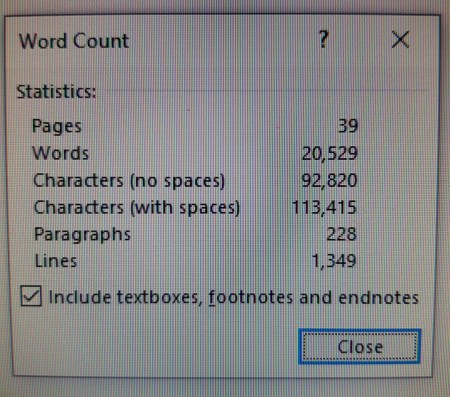
Famously supportive mother that I am, I thought I’d keep her writing company and produce a short story of my own, sticking to the same three prompts. I then spent the next couple of days secretly debating whether or not to abandon the project, because if I gave up before I started nobody would need to know, and I could get on with my life as if nothing happened. But then I thought, I was not getting defeated by some stupid random prompts, and started writing. What I wrote has no artistic value. It is froth and nonsense from start to finish. What I found fascinating though was that even as I spewed out word upon word of pure tripe, I was still getting pulled into this dull pointless prompt-centred world I was creating, and despite having nothing to say on the subject I managed to come close to the word limit in hardly any time at all. Scary stuff.
When I finished I sent my daughter my story with a short note; Dear A, this is by far the worst story I have ever written. It is not funny, it has no plot, but it has a palaeontologist in it and about 2,200 words.

So in a moment, there will be nothing protecting you from the worst no plot no humour non-story you are ever likely to read. I am posting it here just for the record.

I learnt one thing for sure in the last few days, namely never to be tempted to enter a writing competition. The very thought of a panel of faceless jurors reading and judging the freshness and originality of my style killed both of them dead.  You have been warned.

Jurassic Crap – The Story

The day Jurassic Park came to his local cinema, Frank ripped off his cherished Take That poster from the wall and replaced it with a black and red silhouette of a T-Rex. The decisiveness of his action excited and scared him in equal measures. He was never big on spontaneity, so that was a new territory for him, but as he tilted his head to admire his new bedroom decor, he saw his whole future unfold ahead, with the clarity he never thought possible for somebody as prone to awkwardness and confusion as he was. Half an hour into the movie, and he fell in love with the majestic animals, the lush vegetation and the sweeping Mesozoic landscapes. He found the human characters in the movie an irritating distraction and he did not care one iota whether any of them survived to the end or not. This sentiment was to become an overarching principle in his life, whereby he cared significantly more about magnificent dino-worlds and their many visualisations than about the relatively uninspiring reality around him.

Fifteen years later, the T-Rex, was still there on the wall, albeit faded at the edges, and Frank remained faithful to his love of prehistoric world in the way he never managed to maintain an attachment to another human being. He had lived and breathed fossils all his adult life, to the neglect of nearly all other pursuits, and occasionally, basic rules of hygiene. He felt much more at home in the Cretaceous period than in whatever decade he was currently living, in fact, he frequently had to remind himself exactly which decade that was. Frank was at his happiest buried in the underbelly of the Institute, tenderly unpacking and dusting off new artefacts, photographing them, cataloguing them, and affectionately stroking their corners when nobody was looking, trying to piece together their history, before sending them off to the lab.

Despite an unquestionable dedication to his work, Frank’s successes were modest and professional recognition eluded him. His doctoral thesis had twisted itself into a knot of taxonomies, taphonomies, a few other -omies, and ground to a halt in a blind alley, where it was currently parked and where it was going to remain unless he did something about it and soon. If he were to be completely honest with himself, and Frank was adept at avoiding such candour, he would have to admit the possibility that his whole research project might be heading for a scrap heap, pulling his entire career in the Institute with it.

This morning however, he woke up thinking that all of it was no longer of any importance, as his life was about to turn the corner. Today was going to be the first day worth mentioning in his future resume. He was getting the break he’d been longing for.  He conveniently shooed away a question whether he deserved the success that was inevitably hurtling towards him.

There were two reasons why he believed fate was about to deal him a winning hand at last. Both landed through the letterbox on his doormat yesterday.

First was his brand new passport. Frank applied for it several weeks before for no particular reason, just in case, and promptly forgot all about it, so its arrival was a surprise, not an amazing surprise, but not an unwelcome one either.

The second letter was from the Institute. Frank re-read his favourite part of the short note over his bowl of Weetabix, ‘In acknowledgement of your work for the Institute to date, which you always complete to extremely high standards and frequently demanding deadlines, we would like to invite you to an informal meeting to discuss a possible career advancement opportunity. Please contact…’

Frank tried hard not to believe in signs, especially since the last fiasco in that department, when he mistook Maggie’s blocking his number for a clear sign that she really liked him and was simply setting him a challenge by removing the most obvious method of communication from the equation. It was only when her new boyfriend turned up on his doorstep and crushed his septum with one well-executed blow that Frank realised that he might have misread the situation.

Today was different, though. With the passport and the letter arriving in his life at precisely the same moment, the writing was on the wall. He could feel it in his bones. His own bones, he added for his amusement, not the ones that piled in unopened crates in the corner of the room at work. He had a habit of adding palaeontologist in-jokes even when talking to himself.

He brought down a suitcase from the attic and decided to start packing straight away. He was not taking chances, in case they needed somebody who was available immediately. He practised his best casually smug facial expression in the mirror, ‘I’m ready whenever you are’.

Since he had no way of second-guessing which dig site they might have pencilled in for him, packing was proving tricky, so he checked long-term weather forecast for a number of possible countries scattered over four continents; better safe than sorry.
At 7.30 am he could wait no longer.

– Hello, Institute of Vertebrates, Professor Russel’s office, Angela speaking, how may I help you?
– Oh, hi, it’s Frank Dobson, I would like to schedule an appointment with the Professor, I received a letter inviting me to an informal meeting to discuss….
– Hold on a sec, let me log into Professor’s diary, is it urgent?
– Well – Frank put on his conspiratorial voice – you tell me, at the moment your knowledge about what we are likely to talk about is much more accurate than mine, as…
– I am afraid I have no idea what the Professor wishes to discuss with you, but he does have a last minute lunch cancellation today, so would you be able to come today at 12.30?
– A cancellation, I see. Rather a coincidence, wouldn’t you say? Seems like it is more urgent than I thought. Anyway, I don’t suppose you could lift the veil of secrecy, ever so slightly, just a little, and tell me if it’s Mongolia or …?
– Sorry, sir, you lost me. We shall be expecting you at 12.30, and the Professor will have 20 minutes for you.
– I guess discretion is a prerequisite in your job, fine by me, mum’s the word.
– Sir, I have another call waiting, so I am going to end this call, goodbye.
– Not to worry, I appreciate your professional approach, see you soon, nice talking to you.

Frank found himself delivering the last platitudes to the dull continuous phone signal, as Angela had disconnected.

Same day appointments with Professor Russell simply did not happen, unless it was a matter of life and death. Life and death of a fragile fossil site, Frank mused happily. The site which he was being sent to look after, secure and preserve to the best of his abilities. His reputation for being gentle with the artefacts must have been noted where it mattered after all. The only remaining question was, where was he going?

Still only eight thirty, plenty of time to take care of everything. He finished packing, went through the list of current projects the Institute had an interest in worldwide for the third time, made a cucumber and pumpkin salad for Jasper the gerbil, watered the plants, and then slapped his forehead as he suddenly remembered something. Cathy, his elderly next door neighbour was in.
– Hi Cathy, huge favour to ask.

Jasper’s and the plants’ survival secured, Frank strolled out of the door with half an hour to spare. It was only when he got to the bottom of the stairs to the Institute and was about to jump two steps at a time when he realised he was pulling the suitcase behind him. If he went back home now, he would end up being late for the meeting, so he carried on, slowly dragging his luggage upstairs.

– Frank! Thank you for coming so soon. Professor Russell outstretched his warm podgy hand towards him. Just wanted to run something past you. Oh, are you going away? Professor gestured to the suitcase.

– You tell me, Professor, Frank smiled, happy to play along.
If the Professor found his response a bit odd, he didn’t let it show. He carried on.

– I’ve looked at your work records for the last six months, and I could see that you spend most of your time sorting through rather large number of late Triassic fish bones. I hope it won’t put you off fish pie for life.
– I honestly don’t mind, Professor.
– Still, I thought you might be ready for a new challenge.
That was Frank’s cue to deliver his well-rehearsed line.
– I am ready Professor. Ready whenever you are, he added with a knowing nod of the head, overdoing the theatrics slightly.
– Right, right, good to hear. I must warn you though, the learning curve will be steep, and it might be unsociable hours.
– That’s an understatement and a half, Professor, if I may say so.
– Well, I wouldn’t…

– Alright, Professor, I like a bit of teasing just like the next person, but I don’t think I can keep this up much longer, please put me out of my misery. I tried to work it out for myself, I checked a number of our sites, but I am none the wiser, is it Mongolia? Because if it is, I just want to say I am totally fine with it, I mean Argentina sounds really interesting, and I actually got a decent grade in A-level Spanish. Not much use for Spanish in Mongolia, is there? But I think it would be amazing to visit the place, they say one in 200 men living today is a direct descendant of Genghis Khan, so it would be like visiting my ancestors’ graves, unless of course I am one of the remaining 199 men who are nothing to do with him, is it Mongolia, Professor?  And please don’t get me wrong, I have nothing against any other places, I would not want to sound ungrateful, and I am not saying that I wouldn’t be happy about Tanzania or even Utah, because I would, in fact, by all means, Africa, the cradle of civilisation, that makes a lot of sense, I am not picky, so yeah, anywhere at all. I’ve heard we are about to set up camp in Antarctica, is that true, because if it is, I am your man, too, language would not be an issue, I am not sure people are too chatty in those sort of temperatures. Oh, shoot, I will need a visa for Mongolia, won’t I?

Professor Russell was sitting very still. He covered his mouth with his hand, his eyes darting about. When he finally spoke, his voice was soft and gentle, ‘What, for the love of God, are you talking about?’

‘Actually, you know what, let’s try something else, let’s see if we could pretend that this had not just happened, and that you didn’t just lose your, well, not sure what it was really, I can only guess we were not working from the same hymn sheet excuse the cliché. Anyway, where was I, before you felt like sharing a list of random geographical locations with me, oh, yes, steep learning curve.  What I had in mind for you was to give you a senior supervisory role in our brand new coprolite analysis department.  What do you say?

It was Frank’s turn to sit in open-mouthed silence. This went beyond his most daring hopes. Instead of digging in dusty Mongolian steppes or sweating in bug-infested Argentinian pampas, with no guarantee of any significant find, the Professor was inviting him to dig in the actual excrement of actual dinosaurs, without leaving the comfort of the Institute. He was asked to devote his days to peeling off outer layers of mineralised crust to reveal the most precious core, the digested content of the stomachs of those beautiful beasts, oh, my, this was the closest he would ever get to taking the glorious creatures of his dreams for a walk and scooping their poop after them. Life did not get any better than this.

‘People never cease to surprise me’, Cathy told her church choir friends later that week, between sips of aromatic green tea. ‘Take my neighbour Frank. Maureen, you met him, the geeky fossil man. He tells me his boss dropped him in a heap of dinosaur shit, and I mean literally, mind you they have a fancy word for it, crapo-sphere or something, and Frank, bless him, happy as larry about it, calls it promotion, his highest professional achievement. I call it a pile of crap.’


To count or not to count

20200118_162534

Being a part-time writer part-time interpreter part-time wife and mother and all time over-thinker of everything leaves me with precious little time for anything else.

This week I am focusing on overthinking the number of words I should be writing a day if I wish to continue calling myself a writer, as well as the number of hours I should realistically devote to producing the self-prescribed daily word quota.

Having invested, or to be more accurate, wasted, a considerable amount of cognitive time on trying to solve this dilemma, I then made an effort to remind myself that perhaps I should aim for quality over quantity at all times, and if I ever manage to write something remotely reminiscent of one of those beautifully crafted  passages of prose which constrict the reader’s throat and cause a tear to slowly well up in the corner of their eye, then perhaps it really doesn’t matter whether I manage to adhere to a self-inflicted regime of two thousand words a day or any such similarly regimented madness. The only thing that such discipline would achieve would be the confirmation that I possess an abundance of will-power, but would not necessarily make me a writer, never mind a good one.

Or perhaps it would? Is the mere act of churning out words onto paper or screen enough to call oneself a writer, or is the quality of how these words sound when strung together a necessary deciding factor? I have now produced over 200 words writing this piece, which is probably borderline excessive for what it’s worth. I leave you with one of my favourite literary passages of all time. I have a collection of those, but this is the one that comes to mind whenever I think ‘writing perfection’. A few passages from the Bible fall into this category too, but quoting the Bible is spiked with complications, and I don’t want to lead anybody to a conclusion that I am a deeply religious Bible quoting person, because I am not that person at all. But the quote I have chosen is much safer, I hope.

“A few light taps upon the pane made him turn to the window. It had begun to snow again. He watched sleepily the flakes, silver and dark, falling obliquely against the lamplight. The time had come for him to set out on his journey westward. Yes, the newspapers were right: snow was general all over Ireland. It was falling on every part of the dark central plain, on the treeless hills, falling softly upon the Bog of Allen and, farther westward, softly falling into the dark mutinous Shannon waves. It was falling, too, upon every part of the lonely churchyard on the hill where Michael Furey lay buried. It lay thickly drifted on the crooked crosses and headstones, on the spears of the little gate, on the barren thorns. His soul swooned slowly as he heard the snow falling faintly through the universe and faintly falling, like the descent of their last end, upon all the living and the dead.”

– James Joyce, Dubliners


A Young Girl and the Sea

People often have a thing about the sea. Obviously not all people, some people don’t feel anything about the sea, nothing at all, and that might be because they are mountain people, or river people, but some definitely have this thing about the sea, and they go overboard about it, they mythologise it, worship it, talk about its endless appeal, they look at it with reverence and with awe, and see it as a vast infinite mystery of creation and the key to understanding the world, human soul and everything else. Personally, I think they are overthinking the sea, but each to their own.

What follows is a true story. As true as I can make it several decades after it happened. When I was seven years old I went to the seaside for the first time. I went with my mother, her friend Zofia, and Zofia’s daughter Goska, who was a year older than me.  The sea was some 400 kilometres away, so it was the furthest I’d ever been from home at the time. It felt like a massively exciting expedition and I couldn’t wait.

I managed to keep several surprisingly clear memories of that trip. One image I have is of the four of us walking to the beach through the village. The village the way I remember it consisted of long winding dirt track with wonky wooden houses on both sides of the road. The houses looked uneven, in a wavy sort of way, as if they moments from collapsing. I remember dark wooden planks glistening in the sun. I am not sure why they glistened, whether it was rain or a shiny varnish reflecting the sun. This is one of those useless but persistent memories that have stayed with me through the years.

The year was 1974, the year of World Cup final in West Germany. Poland was doing well in the tournament. My mother and Zofia threw themselves into the football and watched all the games on a small black and white TV, with tiny convex screen, like a giant eye of an alien insect.   They both smoked a lot, laughed a lot, shouted and swore every time the game was not going well for us. I remembered being utterly horrified by their behaviour. So much so that I decided to run away. I told Goska. She listened with a serious expression, nodded thoughtfully, and then she said to me, acting like the older and wiser person she was, ‘fair enough, if that is something you feel you need to do, then go ahead and run away, but I am not going with you, I like it here’.  I was furious with her. I felt betrayed and angry. The responsibility of going it alone made me panic and soon my plan was abandoned. I wanted to tell my mother that I was not going to speak to Goska the traitor for the rest of the holiday, but that would no doubt prompt further questions, so I just pretended nothing happened.

My final memory of the trip is of the journey home. We were changing trains at Kutno. We all got onto the connecting train, only to realise that we were on the wrong train. Zofia and Goska picked up their bags and got off the train in time. My mother was dragging our suitcase down the corridor when the train started moving. I knew we were on the wrong train so I sprinted to the nearest door, jumped off the moving train, and rolled onto the platform next to Zofia’s feet. As I got up, I remember seeing my mother leaning out of the window and waving at me vigorously. When we all got reunited a few hours later, she told me she was not waving, she was shaking her finger angrily at me, but I couldn’t see it clearly, as the train was gaining speed by then.

So there, this concludes my memories from my first holiday by the seaside. Dark wooden houses, football and jumping off a moving train. Nothing at all remains of the actual sea, the beach, the sand. No images, no smells, no sounds.  I have not a single photograph of the trip either. I never went to Łeba again. I am told it is quite pretty round there.

Book Recommendation

Today is going to be a good day.

People are persuaded to tell themselves this line, and it is supposed to change the course of their day. I don’t know if today is going to be a good day, but today is the day that I am going to recommend a book to you. This book was a very long time coming, and that is still an understatement.

The way this world works I am going to say that this book was written by somebody I know well, and it tells a story, or rather several mini-stories of court and police interpreting, as well as telephone interpreting and interpreting in social care and medical context.

The stories are entertaining, the book is enjoyable, even if I do say so myself. I would like to recommend it to you. If you do end up not only buying it, but reading it too, please write a review, I would be most genuinely interested to know what you think of it.

So here goes. No further ado.

Introducing View from the Dock, Diary of the Court Interpreter by Cordelia Novak.
I hope you like it.


We voted, now let’s start getting on again.

Last word from me on the subject, before I move on to Christmas. And that’s a promise.

A sense of post-voting deja vu has descended.
On the morning of the 24th of June 2016 I woke up to the BBC news ticker ‘UK votes to leave the EU’. I let out a short shriek of joy, threw my arms in the air, laughed, jumped up, laughed a bit more and couldn’t wipe a disbelieving grin off my face all day. In the evening I went online with the intention of sharing my celebratory mood with like minded friends, but I was stopped in my tracks by a deluge of doom and gloom status updates from the other side.

I decided it would be wise to stay silent for now. I kept my happiness to myself. It took me nearly a year before I dared come out as a Leave voter for fear of hurting the other side’s feelings. I never actively lied about which way I’d voted but I let people assume. It was easier that way and it meant avoiding being called a dumb naive idiot and worse by complete strangers online.

Today I feel this recent history repeating itself. The side I backed won again. This time the victory has been emphatic and, please let me say it just once, it felt bloody fantastic!
Still I feel that what is expected of me is to stay silent, again. I feel forced to show restrain in celebrating the election result for fear of hurting the feelings of those who backed the losing parties last week. I feel bullied into silence and restraint by those who wish to claim moral high ground just like they did three years ago. I am not sure I want to oblige this time, because I am really excited about what the future holds.

The sad side of it is that if I make my views known, I run the risk of being blocked, muted, unfriended and deleted by several people I have known for years, only because we hold different political views. Politics divides today like never before in my living memory.

When I first arrived in the UK I didn’t know how the majority of my friends were voting, they might have hinted but that was all. These days people from all sides wear their voting preferences as a badge of honour and use them as a starting point, and in some cases the only criteria whilst assessing another person’s intelligence, compassion, and decency.

Today, instead of white Christmas, I am dreaming of the day when this is no longer the case.

Cornish Winter Blues

.A day to go

Now that dust begins to settle, I thought it would be a good idea to reflect on my unlikely, borderline surreal stretch of electioneering in North Cornwall. Unlikely for several reasons; not my constituency, not my usual choice of activities in the run up to Christmas, and, last not least, not my party. For those of you who have not heard from me in the last couple of months, I was helping my son and his team in the final stages of their campaign to elect their local candidate to Parliament. The location was Launceston, the party was the Liberal Democrats, the candidate was Danny Chambers, a vet and one of the nicest people you are ever likely to meet.
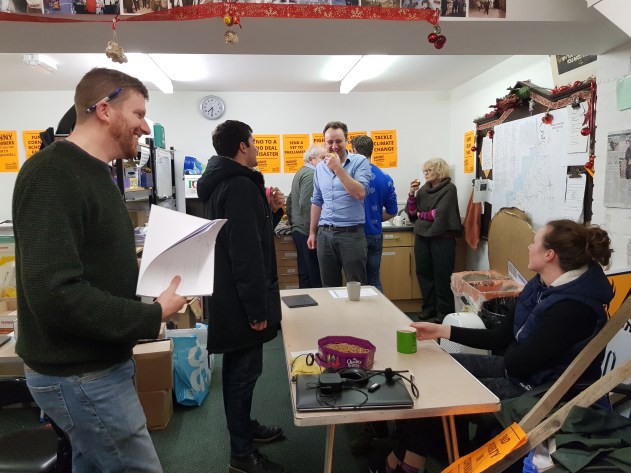
It is possible that I am still drained by it all, my muscles certainly still aching from all the walking, my brain still processing the experience, which makes coherent reflection difficult. As I look back, all I can see is a series of stubborn images that just won’t go away, so I will share these highlights with you.

**

On the first day of heavy leafleting I was paired up with an extremely dedicated lady, wisely covered in waterproof clothing from head to toe. She strode across the housing estate with the drive and focus I am not used to seeing often. At the end of our round, as we were waiting by the car for the others to return from their deliveries, I thought I’d have a go at small talk.

– So, what do you do?
– I am a politician.
– Oh, really? Where do you work?
– In London. I sit in the House of Lords.

**

Phone banking at HQ 48 hours before polling day.

Phone banking in campaigning terms has nothing to do with setting standing orders and paying your water bill, but is simply cold calling unsuspecting voters, interrupting their afternoon naps and dinners, to ask them unapologetically intrusive questions, such as what their voting intentions are, and why on Earth it is not going to be Lib Dem this time.

– Hello, is that Margaret? My name is Ania, and I am calling from the Lib Dem office in Launceston, I am working for Danny Chambers…

– Oh, I know Danny, he came to my door last week. Such a lovely boy, isn’t he. I am 93 years old, but I can see why they chose him, I can see how lots of young women will fancy him. It’s always good if a politician is good looking, isn’t it. It’s important that they are pleasant to look at.

Margaret gives out a naughty giggle, which puts a smile on my face. Not for long.

– Hello, is that Julia? My name is….
– I am sorry but I cannot possibly vote for your party, you want to cancel Brexit and I cannot accept that. Do not call this number again or I will report you for harassment. Goodbye.

– Hello, is that John? My name is Ania and I am calling…. Would you mind telling me how you intend to vote on Thursday?
– Well, I was undecided until now, but since you are the only party that bothered to call me, then I guess I need to return the favour and vote for your chap.

And so it goes, until my fingertip hurts from punching the digits on the office phone.

**

Matt, the campaign manager proudly says to the small crowd who gathered for final Sunday night motivational meeting, ‘every time I go to the pub I tell people something new about Danny, and recently they told me that they feel like they know all about him now’
– Yeah, about that Matt, perhaps you could stop doing it, says Danny in his typical slightly self-conscious hesitant way.

Alright, maybe you would have had to be there to appreciate this one.

**

Early afternoon. Leaflet deliverer comes back to the office after three hours in pouring rain.

– Cup of tea?
– Yes, please, a quick one, and then I will be on my way again. I thought I would do another couple of hours and then jump on telephone banking for the rest of the evening.

I look at the volunteer, and think to myself, what drives you, girl? You and nearly 200 others like you who keep walking through the unassuming yellow office door every day. What unspoken hopes they bring with them, what silent frustrations push them to extremes of physical endurance. One of the volunteers clocked up 70,000 steps on her Fitbit the other day. This is more than I do in a fortnight. I feel not only like an outsider and an impostor that I am, but also like an intruder, a gate crasher at their special celebration of what is best in their community.

**

Wednesday afternoon at Launceston town square. Rain, wind, Danny on a soap box, making final speech of his campaign. A handful of us listen, passers-by give him no more than a hurried glance and walk on. Danny speaks with his usual passion, as if addressing a crowd of thousands, mentions his local Lib Dem predecessors and how he feels honoured to continue in their tradition, how he believes we need more scientists in Parliament, he vows to fight child poverty in the region. This heart wrenchingly modest event feels moving in an understated, dignified way. On the short walk back to the office, I find myself willing North Cornish voters from places I have never heard of until a few days ago, to vote for him despite Brexit, despite Jo Swinson, despite myself.

**

24 hours to go. The Girl with Purple Hair, a keen volunteer, has just had some positive feedback from last minute canvassing and is performing an impromptu victory dance in the office, hands waving, hair tossing, the works, ‘we’ve got it, Danny’s got it, woohoo, we’ve got it!’.
Lip-biting silence greets her, our faces a study in guarded non-committal, as we know that the chances of winning here have always been slim at the very best, but nobody has the heart to snatch this moment of elation from her.

**

And finally. Just so it doesn’t all sound too saccharine sweet.

I never thought it was possible for a human to develop a mama bear level of protective attachment to a printer but I was proven wrong. My offer to assist one particularly zealous volunteer with printing a batch of 3000 polling day Good Morning leaflets was met with ferocious rejection.

– May I help with the printing?
– No! Absolutely not! I need to print them myself!

That was the only moment in the whole impossibly intense week when I felt a sense of perspective slipping away from the Launceston Lib Dem office.  My self-preservation instinct told me to walk away, and off I went into the relative calm of the raging rain and howling wind to deliver the final fifty letters, handwritten by the candidate.

**

Election night. A few minutes past midnight. North Cornwall dream all but over. Exit Poll and Blyth Valley result are greeted with shocked disbelief by my hosts, and then it only gets worse by the hour. This is when I part ways with them,  but it’s not until half way between Exeter St. David’s and Reading that I allow myself to celebrate the biggest victory since 1987 for the party I have supported all my adult life. And even then, the feeling is not as punch-the-air joyous as it would have been if I had spent the previous week buying last minute Christmas presents on Amazon Prime like a normal person. Damn you, Launceston!

Political eye-opener in West Sussex

IMG-20120316-00115

Politics has been a topic of interest in our family for years. My son has loved the idea of being a politician on and off for the last 15 of his 25 years, or at least ever since he read First Among Equals, a classic politician’s handbook by Jeffrey Archer. Channelling Chuka Umunna, or Churchill if we want to go slightly overboard, he went through a couple of parties until he found his perfect fit with the Liberal Democrats.

I myself went through a phase of dabbing in and toying with the idea of having a go at politics. It never amounted to much in the end, and my political involvement to date at its highest was manning a Conservative Friends of Poland stall at a party conference several years ago. I did also go to one, yes one, meeting with local party chairman to discuss the prospect of me running for Tooting. So there, the extent of my once self-delusion, on a plate.

Looking back, it was so laughable that I am no longer sure whether that meeting actually took place, or did I just make it up, the way we all imagine ourselves in situations which are never going to happen, and then re-run these scenarios in our heads until they seem plausible? Well, this now sounds like one of those.

In the event, Dan Watkins took ‘my’ place and lost badly. So, in true Marlon Brando style, it could have been me, I could have lost to Sadiq Khan. Twice.

These days I limit myself to getting embroiled in futile political debates on Facebook. The moment I read that I didn’t know what I was voting for and that I was fooled by a promise on the bus, I am in. Common sense, better judgement, maturity, all forgotten. I don’t do Twitter, though. Small mercies.

The level of our family’s involvement in the actual nitty-gritty of it all goes up and down.
Right now I would say it’s up, what with my son working as a campaign manager for Danny Chambers, the Lib Dem parliamentary candidate for North Cornwall, and my youngest daughter writing emails to her mate Caroline asking her to help her persuade her mother (me) to let her go on another climate strike at the end of the month.

We didn’t know anything about it until Caroline Lucas, Green Party MP for Brighton Pavilion, wrote back; ‘Dear Alexia, thank you for your email, however, I believe it would not be appropriate for me to ask your mum…’ thanks Caroline, at least one thing we can agree on.
Alexia is 14.

The rest of my family adopt a more laid back approach to politics, but it still doesn’t stop my husband from pointing out every gaffe and inconsistency of Boris Johnson’s government with a glint in his eye and reminding me several times a week what his exact opinion on the idiocy of Brexit is.

My middle daughter reserves her judgement, or simply has better things to do with her 17-year-old life.

So anyway. I am mentioning this because in the view of all the above, I might not be best qualified to assess the level of political awareness nationwide, and I might make assumptions judging by what goes on under my own roof, and what shocked me today beyond belief, perhaps shouldn’t have.

Today work took me to an out of the way West Sussex town which shall remain nameless.

Even after all these years, whenever I go out of London I am still surprised by how friendly people are and how much they talk to one another. Today was no different.
A friendly Irish woman in her early thirties started a conversation with me;

– Oh, so you are an interpreter, what language do you speak?
– Polish.
– Oh, I see, you must be busy then, lots of Polish people around here.
– Yes, I am busy for now, but it might all change after Brexit, they might decide to go back to Poland.
– No, no, no, Brexit was cancelled. It is not happening any more, I am pretty sure of it.
– Eer, no, I believe it is still happening, it’s just been a few delays.
– Oh, ok, I thought they cancelled it. What is Brexit anyway, I don’t understand any of it, do you?

I wasn’t sure what to say to that, so I stated the obvious that Brexit meant that we, Britain, the country, were leaving the European Union.  She said she didn’t understand what that actually meant, and then she asked me if I knew whether the word Brexit had any specific meaning or was it just a made-up word.

I began to wonder whether we were on some sort of candid camera wind-up or whether she was seriously asking me that. I told her that Brexit simply meant British Exit from the EU. She was amazed to hear that. She took a couple minutes to digest that piece of information, and then she thanked me for educating her what Brexit was. She was visibly pleased with herself, well, well, well, she said, I learnt something new today.

She then decided that since I was such a fountain of knowledge, she might as well milk me for all I got. What happened to the woman, she asked, they sacked her, didn’t they? We established that she meant Theresa May. She asked me a lot more questions, and she seemed genuinely fascinated by each answer. The highlights of our conversations were what is the EU, was Thatcher a Conservative, and what are we voting for in December.

After lunch, when I thought I was done with politics for the day, another lady, English, middle-aged, started chatting to me. She said she couldn’t help overhearing my earlier conversation. She then told me that Boris Johnson was an American, as he was born in New York, and grew up there, and that’s why he was going to sell our NHS to America.

Who needs the Russians.

6th July 1988. When I began to be me.

I am aware that what follows is the most self-indulgent piece of writing I have ever committed, and also that it is about ten times too long for a blog piece, but it makes sense for me to keep it here.

This was first published here in July 2018, when it made even more sense.

I am re-posting it now on special request. I love special requests.


1.    Prelude: Why at all and why now

6 July 1988 was the day my life changed for ever. People often say this sentence for effect, others rush into using it without much thought, but in my case it would be hard to argue against its suitability. On that day I arrived at Heathrow on a British Airways flight from Warsaw, and what was planned as a three months’ students holiday turned into a lifetime of an ever expanding ever changing devotion first to London and in time to the whole of Britain.

Now that it is coming up to a round anniversary of my English landing, I have decided to commit an abridged version of my first 30 years in England to keyboard. The main reason for this is that as time goes by I find myself doubting my own memory of my English beginnings and I think, was it really me sitting on my own, on that plane one row ahead of the smoking section, excited to the point of bursting? Well, I must have got here somehow so chances are it really was me, but just in case my ageing memory mangles actual events beyond recognition sooner than I am dreading, or I forget large chunks of it beyond rescue, I came to the conclusion that now is a better time to write my English memoir than it will ever be.

The second reason for writing this story now is the sudden urge to tell my children how they came to be what they are and what their mother was like when she was not much older than some of them are now. There is a little more to this reason, and it’s a bit morbid, in the memento mori sort of way. Both my parents died in the last few years, and I have recently come to a painful realisation that I had always known relatively little about their younger years, it was always just fragments of stories without proper beginning or end, of incomplete people and places, and now I will never know any more about any of these stories, people and places, in any greater detail. So, dearest children, I am writing this for you, ready or not.

As I retrace my early steps around London, I might, belatedly, notice and acknowledge significant milestones along the journey and spot, retrospectively, that elusive moment, if indeed it can be pinpointed to a single moment, when I became British, and I know it was a long before the day the Mayor of Wandsworth sealed it with a limp handshake.

I know that despite living in England for the majority of my life, technically, I am not and never can become English, an accident of birth or some other cosmic glitch successfully prevents me from it, I am reluctantly aware of it and I have learnt to live with it, the same way I’ve learnt to live with my frizzy hair and rather large nose, but I prefer not to dwell on any of these irritations in the hope that the hair, the nose and the technical non-Englishness do not define me.

The final reason is pure vanity, I simply love the sound of my own typing on the keyboard.


2.    A long way to Heathrow


750x500-airbus-320-200-1

In July 1988 I had just completed year three, of five, of English and Linguistics Master’s degree at Lodz University. During that academic year a group of young graduates from University of York visited our department and worked as our teachers for the year. In our student jargon we called them natives, short for native-speakers of English, a relatively rare species in our English department and as such coveted by all students, as a much more desirable alternative to being taught Conversational English classes exclusively by Polish born and bred academics.

The York natives of 1988 were also more or less same age as us. This presented an opportunity I was not going to miss. As Poland was still a communist country at that time, it was not exactly easy for Polish citizens to travel to England, and before this current opportunity presented itself, I was slowly resigning myself to the fact that after graduation I would settle into teaching English to children and adults of Poland, talking to them about great monuments of British culture without having seen them close up. The route to Big Ben, Buckingham Palace and Wembley Stadium was tricky and remained firmly beyond many people’s reach at the time.

First, I needed an official invitation from a British host, somebody who would be kind enough and bothered enough to go to the Polish consulate in London, complete the invitation form, have it signed, stamped, ‘ authorised’ and then post it to me. With the invitation in hand, I could apply for a British visa at the British Consulate in Warsaw. The visa section of the British Consulate in Warsaw was only opened a couple of hours a day and so it was accepted as norm to queue for weeks until you were seen at the counter. There was a queue manager, a new one every week, selected from fellow lovers of Britain in the queue. Their duty was to make sure everybody on the waiting list reported regularly to tick off their names confirming they are still in the running. Applicants from outside Warsaw were allowed to tick their names once a week. I remember making three trips on three consecutive Wednesdays, a two hour train journey from Lodz to Warsaw just to tick off my name. There was no other way to remain in the game, or at least none that anybody thought of at the time. Once you were at the visa application desk, the process was surprisingly simple and my passport was stamped with something called a promise of a visa within minutes. The actual visa was only given on arrival in the UK. This provisional visa allowed me to go to a LOT or BA office to book a flight. Airlines were not selling tickets to people without a visa promise.

I set off to work in early October and as time was limited, any subtlety of approach had to be abandoned. I began courting the York natives aggressively as soon as I learnt their names. There were two girls and a guy. I briefly evaluated my chances as well as the wisdom of trying to become a romantic interest of the guy, decided against it as leading to a potentially messy outcome and instead, zoomed in on one of the girls. Cecilia became a frequent guests at my parents’ flat, where I regularly inflicted my mother’s baking and my father’s broken English on her. We spent weekends in Warsaw, Krakow and Gdansk together. I regaled her with history of Łódź. I was very thorough about the origins of local textile industry, its German and Jewish influences, the full caboodle. I dragged her through darkest, dreariest recesses of the city’s museums, remembering to read up on their most impressive exhibits the night before so I could bore her numb with minute details of their provenance and significance.

I allowed Cecilia a short Christmas break but as soon as she was back I engineered a New Year’s trip for all the young natives to the pride and joy of every Polish travel agency, Zakopane in the Tatra Mountains. We spent a few merry days hiking in the snow by day and drinking raspberry vodka by night. We welcomed 1988 in at a forest clearing, having been driven there in an actual one horse sleigh, jingling all the way. Good time was had by all. So much so that when the new term started I assessed that my friendship with Cecilia had reached sufficient depths for me to casually raise the subject of The Invitation. She was only too happy to help me, glad in fact to be able to repay me for all my hospitality. Cecilia’s mum did the deed and I was suddenly one step closer to eating fish and chips from the back pages of the Evening Standard.
A word in mitigation. You know the type of films set among American teenagers where a guy pretends to like the girl for a bet and then gradually falls for her? The same happened to me and Cecilia. I did not fall in love with her, but what started as my shamelessly calculated campaign to elicit the invitation had with time evolved into a real friendship and we had stayed in touch for several years afterwards. Also, as she revealed to me much later, she had been fully aware of what I was doing all along but as she was new and more than a bit lonely in Lodz at the time, she actually welcomed my overzealous attention. Win win.

I was on the first available BA flight to London as soon as I summer exams ended.


3.    A failed Pole

I was picked up at the airport by Renata. I am not entirely sure who she was exactly and how long a chain of acquaintances separated her from my parents was, but somehow they managed to find her, and there she was, whisking me all the way to Willesden Green in her clapped out white Astra. She proved to be a true life saver in those first days and weeks, as she took it upon herself to mother me discreetly but firmly. I never learnt much about her, except what I could see for myself. She was a rather shy, reserved Polish lady in her late thirties, with a considerably older possibly second generation Pole for a husband. They had a teenage daughter who was away on holiday at the time of my arrival, so Renata let me stay in her room for a couple of weeks, charging me £20 per week. I had brought 640 US dollars with me from Poland, which my dad had somehow managed to conjure up from the same box of his magic tricks he pulled out Renata from.

Nothing could have prepared me for that first evening at Renata’s house, the ambush was complete.

As soon as Renata unlocked the front door, I became aware of a rather large group of people chatting loudly in the living room and kitchen. I was ready to feel really bad, as it looked like Renata had gone all the way to Heathrow to pick me up despite having a house full of guests, but just then Renata announced, in Polish, her face beaming with joy and excitement, hey, everybody, she is here now!  Everybody greeted me like a celebrity, they guided me towards an armchair, I was given something to drink, and then all these people suddenly gathered around me and looked at me with a mix of curiosity and something approaching tenderness. Awkward, was all I managed to think, but then an elderly man said, welcome to England, child, now tell us all about Poland, what is the national mood really like, how are people bearing up, anything in the offing? I stared at him blankly for several seconds to buy time. I then hastily arranged my face into the most patriotically concerned expression I could convincingly pull off and said something non-committal and vaguely cheerful, how people are keeping strong and hopeful and they pray a lot. It transpired that Renata had invited all her friends and relatives for an opportunity to meet a young Polish woman fresh from the boat, plane, same thing, from Motherland who would no doubt impart all the latest political news and gossip, undistorted by censorship and media’s sensationalist take on it. Little did they know that my life in the last year had revolved around courting Cecilia, fantasising about London, and stressing about essay deadlines, leaving me no time to pay attention to politics or social mood in the country. I did not know anybody in either pro, or anti-government movements, and despite my best attempt to bullshit my way out of, it had fast become glaringly obvious that Renata’s guests had wasted a journey to her house that day.

I realised that all these long-term expats knew more and cared more about what was going on in Poland politically and socially than I ever did. In the summer of 1988 Poland was still a Communist country, it was to be another year until a well-liked Polish actress bizarrely announced the end of Communism on national television. I had lived all my life under the rule of the Polish People’s Party and that was the only reality I’d ever known. I didn’t question it, I was never unhappy about it, I didn’t fight against it, I just enjoyed a carefree, contented childhood in what I considered sufficiently comfortable surroundings.

As far as I could recall, politics had invaded my safe cosy world only twice during my childhood in Poland. First, on the day Martial Law was declared one grey Sunday in mid-December, as my parents listened with silent dread to the general’s long sombre speech, I could hardly contain my joy on hearing that school was out from now until January. Christmas break was usually just a short few days’ affair at the time and three extra weeks sounded almost too good to be true!  I was 15 at the time.

Second time the side effects of the regime burst brutally into my carefree existence a couple years later, again in December. On that occasion I got frostbite after I stumbled upon a queue for lemons and spent four hours standing outside a fruit and veg shop in sub-zero temperatures. Lemons was not something you walked away from in those days. I have suffered from red nose and rosy cheeks in cold weather ever since, but it hardly qualifies me as a victim of oppressive Communist regime. I still drink black tea with a slice of lemon every night, which might have a symbolic meaning, but I think it does not go any deeper than the fact that I do not enjoy tea with milk.

The General and the lemons both flashed through my mind now as I sat in the middle of Renata’s living room in NW10, but I had nothing more current or remotely relevant to offer the small expectant crowd. I felt a fraud and a big fat failure as a Pole. This feeling, which lodged itself in my brain on that day had grown alarmingly with every passing year. It has since acquired the size of Poland itself and is being permanently stored in the darkest corner of my guilty conscience.

I reminisced about that evening several times over the next couple of decades, as it marked a starting point in my ongoing uneasy relationship with so called Polish diaspora in Britain.

Now, however, as the sun set on my first day in Britain, Poland and its political woes were the last thing I wanted to think about as I was getting ready to explore London the following morning.


… And cut!

My story is still only just beginning. However, my publisher (yes, really) advised me to stop here, and to say that those of you who would like to read more (who wouldn’t?), can look forward to the book version of my English beginnings in mid-2020.

Lib Dem Election News from North Cornwall

There is a powerful scene in The King’s Speech when Colin Firth’s stammer-ridden George VI shouts, to a deafening echo, ‘I have a voice!’.
After that, things begin to look up for him.

Watching recent developments on the Lib Dem General Election campaign trail, I can report with growing confidence that North Cornwall is on its way to discover that it does indeed have a powerful voice and that it can stand up for itself in Westminster.

North Cornwall is one of the Lib Dem designated target seats in the current election, where they believe they stand a realistic chance of replacing the current Tory MP with a Lib Dem one.  The cautiously optimistic view among their supporters is that they are on the right track to achieve just that.

The number of people who turn up to volunteer, offer encouragement and support to Danny Chambers, the Liberal Democrats Parliamentary Candidate for North Cornwall has been overwhelming of late. There is nothing quite like a General Election to bring out community spirit around here.

The young, the old, and everybody in between flock to the modest Lib Dem headquarters in Launceston ready to knock on doors, fold leaflets, and put the kettle on. They bring their eager anticipation, barely concealed excitement and jumbo packs of jammy dodgers. They know they have a real chance to make a difference, and to add a splash of yellow to the monolithic blue map of their part of the world in the early hours of the 13th of December.

I spoke to a few volunteers who are drawn to the Lib Dem North Cornwall headquarters in Launceston on a daily basis to assist elect Danny as North Cornwall next Lib Dem MP in December.

I asked them what brings them there, what motivates them to join in the campaign to oust the current Conservative MP for the area.

This is what they told me.

‘Poverty is a very real issue for a lot of local people. Minimum wage is not being implemented here, what with the gig economy, seasonal jobs, zero hours contracts, at the moment a lot of people are being caught out by the Universal Credit payments delays. I see a lot of van drivers, so there jobs, but there is no security.’

‘Tories tend to brush poverty under the carpet, and poverty is a big issue in North Cornwall. Danny Chambers will be the champion for poor people, he will fight for fairer funding for Cornwall. I know a lot of people who rely on food banks on a regular basis to survive, and they are not unemployed, they are working poor. The fact that we have food banks in Cornwall is a shameful state of affairs.

We hope that when Danny is elected as our Lib Dem MP, he will work hard to get rid of food banks, by increasing investment in the region, which will create jobs, will bring new opportunities, will inject new life into our area’.

‘What we are hearing on the doorsteps is that things were better here when we had our last Lib Dem MP, Dan Rogerson. People tell us stories how Dan solved a lot of their problems, was showing interest in their lives, unlike the current MP.  The mood that I pick up when canvassing is cautious optimism, hopeful that when Danny wins, North Cornwall wins. People take our leaflets, read them, ask us questions, so the message from the doorsteps gives us hope, it’s a positive sign that they are willing to listen, and that they are thinking what choice they want to make, and how it is going to affect their lives.’

‘People are impressed by our Green policies, by Danny’s understanding of climate change issues. Even Brexit supporters respect our Green policies and the fact that our candidate is from farming background, he knows our problems, he knows the difficulties we face. People respond very well to Danny, they respect him for who he is and what he stands for.’

‘Brexit is a damaging distraction from what we in North Cornwall should be concerned about. What we should really consider when making our voting choices should be dictated what is best for our local area, and having somebody who grew up on a local farm and went on to become a local veterinary surgeon really is as good as it gets in terms of suitability to represent us in Parliament.’

Another volunteer told me that she got involved because she is has had enough of Brexit and enough of the Conservatives who have proven bad for the region, who are failing here. I am hopeful, she told me, that there might be some hidden Remainers in the area who do not advertise their Remain sympathies for fear of antagonising their neighbours, but hopefully they will make their sentiments known at the ballot boxes. I am also counting on growing numbers of Leave voters who are slowly changing their minds, three years is a long time and some of them might be getting a better understanding of what Brexit will actually mean for us in Cornwall. Farmers and fishermen begin to realise that Brexit is not going to be good for them. They put up Leave posters in their fields, but I sense a budding awareness that Brexit would in fact be damaging for them.

And then there are those who voted Brexit but changed their minds. These people are telling us that they are going to vote for us, which makes sense, because, if you take Brexit out of the equation, North Cornwall is more likely to vote Lib Dem than Tory. Let’s hope there are people out there changing their minds as we speak.

Our current MP likes to take credit for everything, so he takes credit when it’s not due, we see him as a limelight-hogger, but I have not seen him do anything to better the lives of local people. Our schools and the NHS are underfunded, the bus network is being cut down, and food banks are everywhere. I have every confidence that Danny is the right man to address all our most pressing issues.

Our previous Lib Dem MP, Dan Rogerson, did a lot for Cornwall, and we are hoping that Danny will be given the chance to continue Dan’s work very soon. Cornwall has been by and large ignored by the Tories in terms of funding, as they believe in small government they have cut spending on everything and we really suffer the effects of this now. We have not seen any investment, and this lack of funding is bringing degeneration here, we are seeing job losses, we are seeing stagnation.  Danny is our best hope for revitalisation of our local area. I cannot overstate how much people are looking forward to overturning the current Tory majority here.

How would I feel if Danny wins? Brilliant! It would mean victory for Cornwall. Danny listens to people, and he understands local issues.


Danny Chambers

Dannys Group photo


Brexit and other (farm) animals

A week in, dust begins to settle allowing an early shape of this election campaign to emerge. Main goals, in no particular order, are, get Brexit done, cancel Brexit, keep Corbyn out, get Boris out, get the second referendum.

Tactical voting, pacts and alliances seems to be what it’s all about. Except it shouldn’t be. Blinded by Brexit we are running a risk of overlooking what should be a primary consideration, namely, the person behind each name on the ballot paper. Who they are, what they stand for, and if they are currently in office, how they have been doing so far.

I stopped being surprised at life’s little surprises long time ago, so when I found myself in a ringside seat for the prelude to this campaign in a deeply rural part of the country, I just ran with it.

Traditionally, October half term is the time when we, as a family, explore a part of the UK we have not been before, or revisit the parts we are particularly fond of. It is also the time when I arrive at an annual realisation that there is indeed life outside London. My metropolitan arrogance is taken down a notch as I am reminded that it is possible to have a fulfilled existence without the trappings of urban life.

This year our pumpkin season short break took us to Launceston, North Cornwall.  We were visiting our son, Matt, who had been working at North Cornwall Liberal Democrats Headquarters down there for the last few months. It made sense to check on him and bring him warm underwear. Matt told us not to worry about booking a hotel, he had it all under control. I began to worry. As it turned out, I needn’t have, he did well.

I knew we were likely to meet Danny Chambers, the Lib Dem Parliamentary candidate for North Cornwall, whose campaign Matt had been put in charge of. What I didn’t know was that we would be staying as house guests at his farmhouse.

It might be worth mentioning at this point that I am a lifelong Conservative voter and a no regrets Brexiteer.

Small talk kept us going for a couple of hours, we carefully avoided eye contact with the huge elephant in the corner. It was only after the last crumbs of homemade scones were cleared away that the B word was mentioned.

Danny sounded genuinely incredulous when he asked me my reasons for voting Leave. The conversation ran its usual course, the NHS bus, Turkey membership, refugee quotas, sovereignty, naivety, ignorance, emotional voting, patriotism, you name it. We skipped the fish and the bananas, as these do sound rather silly.

The discussion got as heated as it possibly could in the circumstances. We were all aware of the awkwardness of the situation. Danny was talking to the mother of his most trusted employee, I was talking to somebody who offered us a place to stay for the night. It was wise to cool down, as the only alternative would have been to walk out into cold damp Cornish night and stay there. Not clever.

We steered the conversation away from Brexit and onto a safer territory of local farming matters, and that is when it became really interesting. Danny is North Cornwall born and bred, his parents had a farm nearby, Danny himself is a neighbourhood vet. He knows farming first hand, he knows how hard it is, what dedication it requires, he speaks farmers’ language. He knows farm animals, he treats them, injects them, cleans their hooves and teeth, he delivers their babies. He has been doing it for donkey’s years. He understands how weather affects farming, he speaks about climate change from the position of somebody who has been on the receiving end of it for a while. He is the perfect man to represent North Cornwall’s interests in Westminster.

And yet. He is up against the Conservative MP, Scott Mann, also a local lad, and an ex-postman. So far so head to head. Scott Mann’s parliamentary voting record, is where their paths diverge. I’ll spare you googling time. Scott Mann generally votes against laws to promote equality and human rights, against the right for EU nationals already living in the UK to remain in the UK, despite government’s assurances on the subject, and, what is possibly most significant for somebody from rural part of the country, he consistently votes against measures to prevent climate change.

How on Earth was this man elected, and re-elected as an MP for Cornwall? One word. Brexit.
Make no mistake, I want Brexit, I do, I was hoping for a Halloween one. What I don’t want is for people all over the country to vote for the wrong person for their region based on Brexit and Brexit alone ignoring what is good for them locally.

I never viewed politics at such close range, so that weekend at Danny’s was an eye-opener. I don’t really have a witty closing sentence, I wish I did.
Oh, wait, I do. Vote Danny Chambers for North Cornwall.

https://www.dannychambers.org.uk/

Below, Danny tries his best to remain polite in the face of my out of control brexiteering under his roof, whilst my husband looks on and my daughter strives to retain her sanity by building a house of cards.

20191019_213801.jpg